
I didn’t grow up eating mango pudding.
I grew up eating boxed Jell-O, which, looking back, is kind of sad.
Then I had real mango pudding for the first time at a tiny Hong Kong dessert shop, and I genuinely stopped talking mid-sentence.
It was silky. It was barely sweet. It tasted like someone had bottled a perfectly ripe mango and figured out how to make it wobble.
I’ve been making it at home ever since, and it’s stupidly simple once you know the tricks.
So let’s get into it.
Recipe at a Glance
| Detail | Info |
|---|---|
| Prep time | 15 minutes |
| Chill time | 4 hours (or overnight) |
| Total time | 4 hours 15 minutes |
| Servings | 6 |
| Difficulty | Easy |
| Cost | Budget-friendly |
Why This Recipe Works
Real mango pudding isn’t just mango-flavored gelatin.
The magic is in the ratio. Too much gelatin and you get a rubbery mango brick. Too little and it won’t hold its shape.
I’ve tested this recipe more times than I want to admit, and this version sets perfectly every single time.
Fair warning: once you taste homemade mango pudding, the store-bought stuff will feel like a personal insult.
What You’ll Need
Ingredients
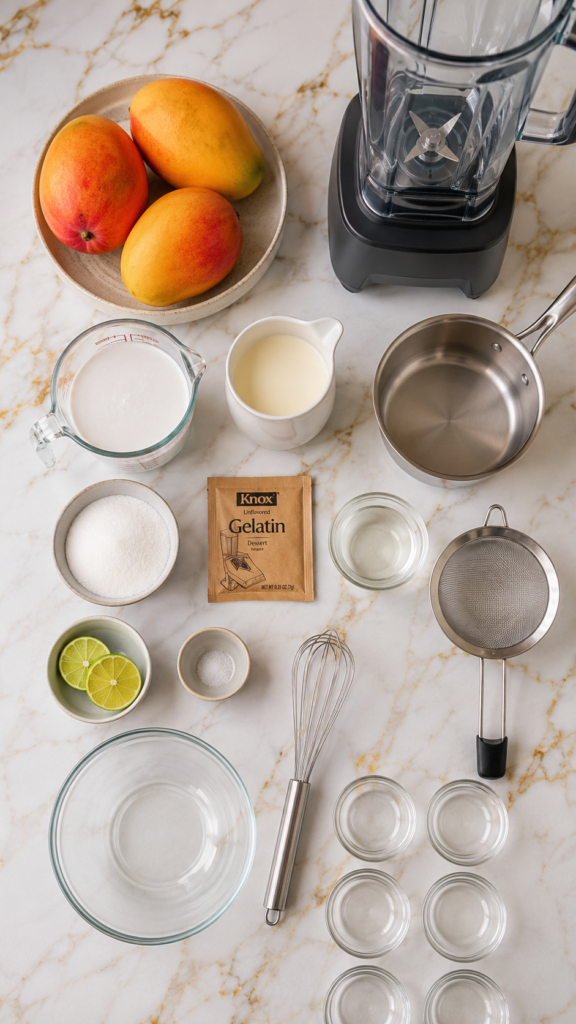
- 3 ripe mangoes (about 2 cups puree)
- 1 cup coconut milk (full-fat, for that rich finish)
- ½ cup heavy cream
- ⅓ cup sugar (adjust based on how sweet your mangoes are)
- 2 ½ teaspoons unflavored gelatin powder
- 3 tablespoons cold water
- 1 tablespoon fresh lime juice
- Pinch of salt
Optional garnish
- Fresh mango slices
- A splash of coconut cream
- Fresh mint leaves
Tools You’ll Need
- Blender or food processor
- Small saucepan
- Fine mesh strainer
- Mixing bowl
- 6 small serving cups or ramekins
- Whisk
How to Make Mango Pudding
- Puree the mangoes. Add mango chunks to a blender with the coconut milk and blend until completely smooth.
- Strain the mixture. Pour it through a fine mesh strainer into a bowl to remove any fibers.
- Bloom the gelatin. Sprinkle the gelatin powder over the cold water in a small saucepan. Let it sit for 5 minutes.
- Warm gently. Turn the heat to low and stir the gelatin mixture until fully dissolved, about 2 minutes. Do not let it boil.
- Combine. Whisk the warm gelatin into the mango puree along with the sugar, heavy cream, lime juice, and salt. Whisk until the sugar dissolves completely.
- Pour into cups. Divide the mixture evenly among your serving cups.
- Chill. Cover and refrigerate for at least 4 hours, or overnight for the best texture.
- Garnish and serve. Top with fresh mango slices, a drizzle of coconut cream, and mint if you’re feeling fancy.
Pro Tips
1. Use mangoes that smell sweet, not just look ripe. Give it a sniff near the stem. If it smells fragrant and a little floral, you’re good. Color alone lies to you.
2. Bloom your gelatin properly. Sprinkle the gelatin over cold water and let it sit for 5 minutes untouched. Skipping this step is the #1 reason people end up with lumpy pudding.
3. Strain your puree. Mango fibers are sneaky. Straining gives you that glassy, restaurant-style texture instead of something chunky.
4. Don’t rush the chill time. I know it’s tempting to peek at 2 hours. Resist. The texture isn’t fully set until at least 4 hours in.
5. Warm the gelatin gently. Never boil it. Overheated gelatin loses its setting power, and you’ll end up with mango soup.
Substitutions and Variations
- No coconut milk? Whole milk works, though you’ll lose some of that tropical richness.
- Vegan version: Swap gelatin for agar agar (use about half the amount, since agar sets firmer) and use coconut cream instead of heavy cream.
- Extra tropical: Add a layer of passionfruit puree on top before chilling.
- Lower sugar: Cut sugar to ¼ cup if your mangoes are very ripe and sweet already.
- Boozy adult version: A tablespoon of mango rum stirred in after blooming the gelatin is genuinely incredible.
Make-Ahead Tips
This is one of those desserts that actually gets better with time.
- Make it up to 3 days ahead and store covered in the fridge.
- Add fresh garnish right before serving so it doesn’t get soggy.
- Great for meal-prepping a week of light desserts in one go.
Nutrition and Diet Notes
Here’s a rough breakdown per serving (based on 6 servings):
| Nutrient | Approximate Amount |
|---|---|
| Calories | 210 |
| Total Fat | 12g |
| Saturated Fat | 9g |
| Carbohydrates | 24g |
| Sugar | 20g |
| Protein | 2g |
Diet-friendly swaps:
- Dairy-free: Skip the heavy cream, use extra coconut milk instead.
- Lower sugar: Reduce sugar and lean on very ripe mangoes for natural sweetness.
- Gluten-free: This recipe is naturally gluten-free as written.
Meal Pairing Ideas
Mango pudding is light, so it pairs beautifully after heavier meals.
- Serve after a spicy Thai curry to cool the palate.
- Pair with grilled shrimp skewers for a summer dinner party.
- Great alongside coconut rice desserts for a full tropical spread.
Leftovers and Storage
Mango pudding stores surprisingly well.
- Fridge: Keeps well covered for up to 4 days.
- Freezer: Not recommended. The texture turns grainy once thawed.
- Serving leftovers: Let it sit at room temp for 5 minutes before eating for the best texture.
FAQ
Can I use frozen mango instead of fresh? Yes. Thaw it first and pat off excess liquid so your pudding isn’t watery.
Why is my pudding not setting? Usually it’s one of two things: the gelatin wasn’t bloomed properly, or it got boiled at some point, which kills its setting power.
Can I make this without gelatin? Yes, agar agar works as a plant-based substitute. Just note it sets firmer, so use less than the recipe calls for.
Why strain the mango puree? Mango has natural fibers that create a grainy texture. Straining gives you that smooth, glossy finish you get at restaurants.
Can I double this recipe? Absolutely. Just keep the same ratios and pour into more cups, or one larger dish.
Wrapping Up
This is the kind of dessert that looks fancy enough for guests but takes almost no real effort.
Once you make it once, you’ll understand why I can’t go back to the boxed stuff.
Give it a try this week, and come back and tell me how it turned out. Did you add any twists? Any questions before you start? Drop them in the comments, I read every single one.