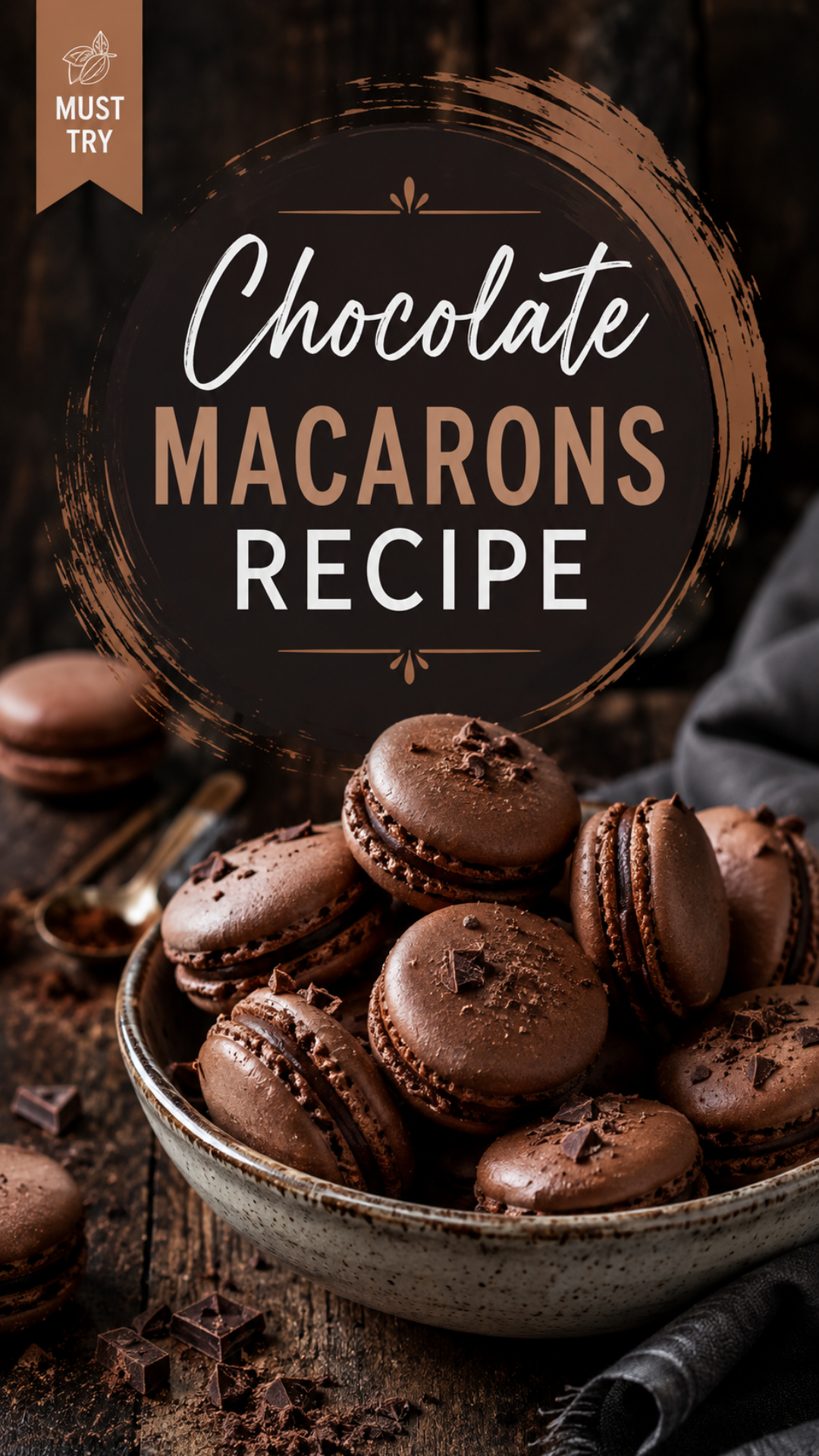
I used to think macarons were one of those things you just buy.
You know, like croissants or a good baguette. Something you leave to the French bakery down the street because making them yourself sounded like a recipe for a kitchen meltdown (mine, not the chocolate’s).
Then I actually made a batch. And I get it now. Macarons have a reputation, but once you know the little things that actually matter, they’re honestly kind of fun to make.
So today we’re making chocolate macarons with a rich chocolate ganache filling. Crisp shell, soft chewy center, deep chocolate flavor. Let’s get into it. 🍫
Recipe At a Glance
| Detail | Info |
|---|---|
| Prep Time | 45 minutes |
| Rest Time | 30-60 minutes |
| Cook Time | 15 minutes |
| Total Time | About 2 hours |
| Yield | 20-24 filled macarons |
| Difficulty | Medium |
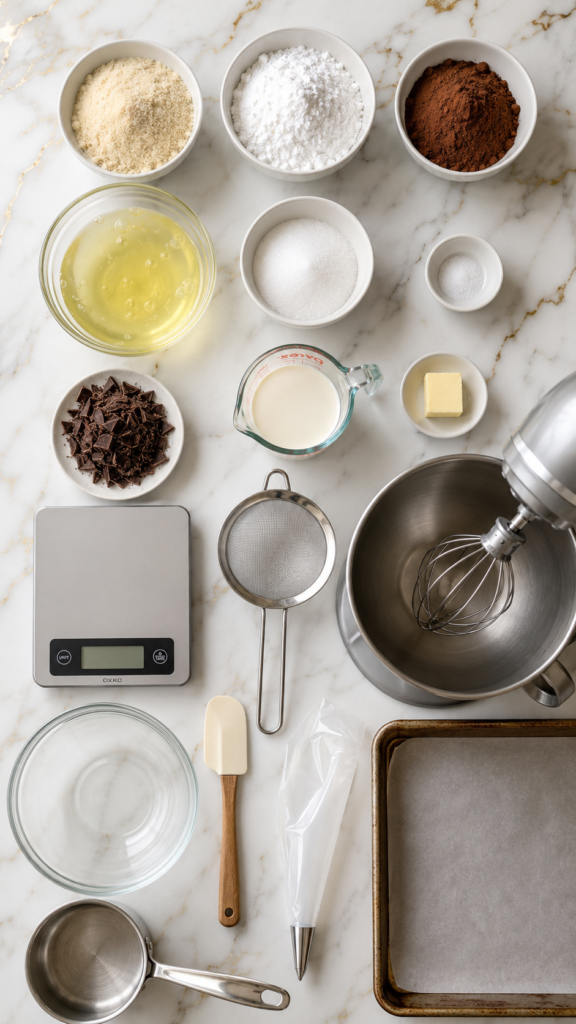
What You’ll Need
For the Chocolate Macaron Shells
- 1 cup almond flour (superfine, blanched)
- 1 ¾ cups powdered sugar
- 3 tablespoons unsweetened cocoa powder
- 3 large egg whites, room temperature
- ¼ cup granulated sugar
- Pinch of salt
For the Chocolate Ganache Filling
- 4 oz dark chocolate, finely chopped
- ½ cup heavy cream
- 1 tablespoon unsalted butter, softened
That’s it. No wild ingredient list, no trips to three different stores.
Tools You’ll Need
- Kitchen scale (this one actually matters, more on that below)
- Fine mesh sieve
- Stand mixer or hand mixer
- Large mixing bowl
- Silicone spatula
- Piping bag with a round tip
- Baking sheets
- Parchment paper or silicone macaron mats
- Small saucepan (for the ganache)
Pro Tips
1. Weigh your ingredients if you can. Macarons are one of the only recipes where a kitchen scale genuinely changes the outcome. Cups of almond flour can vary a lot depending on how packed they are, and that variance is enough to throw off the whole batch.
2. Age your egg whites. Separate your eggs the night before and let the whites sit uncovered in the fridge, then bring them to room temp before baking. It sounds excessive, but it helps them whip up stronger.
3. Don’t skip the resting step. After piping, let the shells sit out until they form a skin you can lightly touch without it sticking to your finger. This is what gives macarons their signature “feet” (the little ruffled edge at the base).
4. Sift, then sift again. Almond flour and powdered sugar both clump. Sifting twice keeps your shells smooth instead of speckled and bumpy.
5. Tap the tray, hard. After piping, smack the baking sheet on the counter a few times. This releases air bubbles that would otherwise crack your shells in the oven.
Substitutions and Variations
- Almond-free: Swap almond flour for sunflower seed flour in the same amount. The color turns slightly green from a chemical reaction with baking soda, so skip any leaveners if you go this route.
- Dairy-free ganache: Use full-fat coconut milk instead of heavy cream, and a dairy-free butter alternative.
- Flavor twist: Add a teaspoon of instant espresso powder to the shells for a mocha version, or orange zest to the ganache for a chocolate-orange combo.
- Filling swap: Try a peanut butter ganache, raspberry jam, or salted caramel instead of chocolate ganache.
Make-Ahead Tips
Macaron shells actually taste better the next day. The filling softens the shells slightly and everything melds together.
- Make the shells up to 2 days ahead and store unfilled in an airtight container.
- Ganache can be made 3-4 days ahead and kept in the fridge. Bring to room temp before piping.
- Fully assembled macarons freeze well for up to a month.
A Few Extra Details
Nutrition (approximate, per macaron): Roughly 90-110 calories, 5g fat, 12g carbs, 1-2g protein. This varies based on your exact ganache ratio and shell size.
Diet notes: Naturally gluten-free since almond flour replaces wheat flour. Not nut-free due to the almond flour, and the sunflower seed swap above is the way around that.
Pairing ideas: Espresso, a glass of dessert wine, or simply cold milk. They also make a great addition to a dessert board alongside fresh berries.
How to Make Chocolate Macarons
Step 1: Prep the Dry Ingredients
Sift the almond flour, powdered sugar, and cocoa powder together into a bowl. Sift a second time to remove any clumps. Set aside.
Step 2: Whip the Egg Whites
In a stand mixer, beat the egg whites and salt on medium speed until foamy. Slowly add the granulated sugar, one tablespoon at a time, then increase speed to medium-high. Beat until you reach stiff, glossy peaks.
Step 3: The Macaronage (Folding Stage)
Add the dry ingredients to the egg whites in three additions, folding gently with a spatula each time. Press the batter against the side of the bowl as you fold. You’re looking for a batter that flows like lava, thick but slowly settling when you lift the spatula.
Step 4: Pipe the Shells
Transfer the batter to a piping bag fitted with a round tip. Pipe 1.5-inch circles onto parchment-lined baking sheets, spacing them evenly.
Step 5: Rest
Let the piped shells sit at room temperature for 30-60 minutes, until they form a matte, non-sticky skin.
Step 6: Bake
Preheat your oven to 300°F. Bake one tray at a time for 14-16 minutes, rotating halfway through. The shells should have risen with visible feet and not wobble when gently touched.
Step 7: Cool Completely
Let the shells cool fully on the tray before removing. They’re fragile while warm.
Step 8: Make the Ganache
Heat the cream in a small saucepan until it just begins to simmer. Pour over the chopped chocolate and let sit for 2 minutes, then stir until smooth. Add the butter and stir until glossy. Let cool until thick enough to pipe, about 20-30 minutes.
Step 9: Assemble
Pair shells by similar size. Pipe a small amount of ganache onto one shell, then sandwich with its matching pair.
Step 10: Rest Again
Refrigerate the filled macarons for at least 24 hours before eating. I know, more waiting. But this step is what turns good macarons into great ones.
Leftovers and Storage
- Fridge: Store in an airtight container for up to 5 days.
- Freezer: Freeze filled macarons in a single layer, then transfer to a freezer bag for up to a month.
- Serving from frozen: Thaw in the fridge overnight, then bring to room temp for 15 minutes before eating.
FAQ
Why did my macarons crack? Usually one of two things: skipping the resting step, or an oven that runs hotter than it says.
Why are my shells hollow inside? This often comes from underwhipped egg whites or overmixing the batter during the folding stage.
Can I use liquid egg whites from a carton? It’s possible, but fresh whites whip up more reliably. If you do use carton whites, make sure they’re at room temperature first.
Do I need a silicone mat? Not required, but it does help shells bake more evenly compared to parchment paper alone.
Why do my macarons have no feet? This is almost always a resting issue. The skin needs to form fully before baking, or the shells won’t rise properly.
Can I make these without a stand mixer? Yes, a hand mixer works fine, it just takes a bit longer to reach stiff peaks.
Wrapping Up
Macarons have this reputation for being finicky, and sure, there’s a learning curve. But once you’ve made one batch, you’ll start noticing exactly what your batter needs just by looking at it.
Give this recipe a try, and don’t stress if your first batch isn’t picture-perfect. Even slightly cracked macarons taste incredible.
Drop a comment below and let me know how yours turned out, or ask away if you hit a snag somewhere in the process. I read every one. 🍫