Would you believe me if I told you a 4-ingredient cookie could beat every fancy bakery cookie I’ve ever paid $6 for?
Because that’s exactly what happened the first time I made pecan sandies.
I wasn’t even trying to impress anyone. I just had a bag of pecans sitting in my pantry, going a little stale, and I needed to use them before they went bad.
What came out of my oven 20 minutes later was so buttery and so shatteringly crisp that I ate four in a row standing over the kitchen counter. 🧈
No plate. No shame.
If you’ve never made pecan sandies before, they’re a little different from your average cookie. There’s no eggs. No baking powder. Just butter, sugar, flour, and pecans, working together to create this sandy, melt-in-your-mouth texture that’s honestly hard to describe until you taste it.
So let’s get into it.
Recipe At A Glance
| Detail | Info |
|---|---|
| Prep Time | 15 minutes |
| Chill Time | 30 minutes |
| Bake Time | 15-18 minutes |
| Total Time | About 1 hour |
| Yield | 24 cookies |
| Difficulty | Beginner-friendly |
| Best For | Holidays, gifting, afternoon coffee breaks |
What You’ll Need
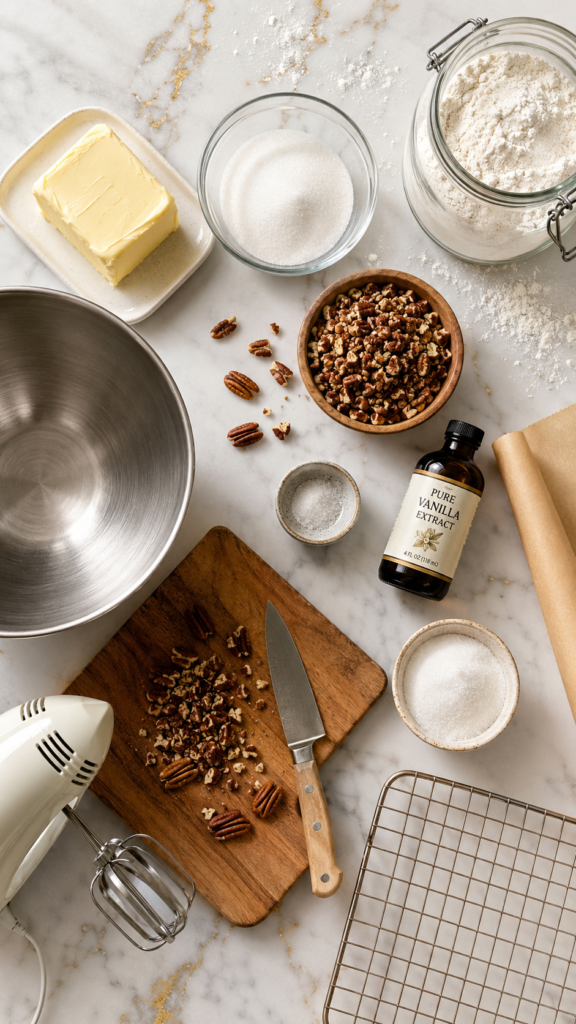
Here’s everything that goes into these cookies. Simple list, huge payoff.
- 1 cup unsalted butter, softened
- ½ cup granulated sugar
- 2 cups all-purpose flour
- 1 cup pecans, finely chopped
- 1 teaspoon vanilla extract
- ½ teaspoon salt
- Extra granulated sugar for rolling (optional, but I never skip it)
That’s it. Seven ingredients, most of which you probably already have.
Tools You’ll Need
- Mixing bowl
- Hand mixer or stand mixer
- Baking sheet
- Parchment paper
- Cutting board and knife (for chopping pecans)
- Cooling rack
How To Make Pecan Sandies
Step 1: Cream the Butter and Sugar
Beat the softened butter and sugar together until it’s light and fluffy.
This usually takes about 2-3 minutes with a hand mixer.
Don’t rush this step. It’s where the texture magic starts.
Step 2: Add the Vanilla
Mix in the vanilla extract until it’s fully combined.
Your kitchen will smell incredible already.
Step 3: Add the Dry Ingredients
Slowly add the flour and salt into the butter mixture.
Mix on low speed so you don’t end up wearing flour.
The dough will look crumbly at first. That’s normal.
Step 4: Fold in the Pecans
Add your chopped pecans and fold them in by hand.
You want them evenly distributed, but don’t overwork the dough.
Step 5: Chill the Dough
Shape the dough into a log, wrap it in plastic wrap, and chill for at least 30 minutes.
This step is non-negotiable if you want clean, sturdy slices.
Step 6: Slice and Bake
Preheat your oven to 350°F.
Slice the chilled dough into rounds about ¼ inch thick.
Place them on a parchment-lined baking sheet, leaving a little room between each cookie.
Bake for 15-18 minutes, until the edges are just barely golden.
Step 7: Roll in Sugar (Optional But Recommended)
While the cookies are still warm, roll them in granulated sugar.
This gives them that classic sandy, slightly sparkly finish.
Let them cool completely on a rack before storing.
Pro Tips
1. Toast your pecans first. This one small step makes a shocking difference. Toasting for 5-7 minutes in a dry pan brings out a deeper, nuttier flavor you’ll notice immediately.
2. Use a kitchen scale if you have one. Butter cookies are sensitive to ratios. A little too much flour and they turn dry instead of sandy.
3. Don’t skip the chill time. I tried rushing this once. The cookies spread out flat and lost that classic round shape.
4. Slice evenly. Uneven slices mean uneven baking, and nobody wants a burnt edge next to a raw center.
5. Let them cool before storing. Warm cookies + a sealed container = soggy cookies. Patience pays off here.
Substitutions and Variations
Want to switch things up? Here are a few ideas that work well.
- Nut swap: Walnuts or almonds work great if pecans aren’t your thing.
- Butter alternative: Plant-based butter works for a dairy-free version, though the texture will be slightly softer.
- Flour swap: A 1:1 gluten-free flour blend can replace the all-purpose flour.
- Flavor twist: Add a pinch of cinnamon or orange zest for a subtle seasonal spin.
- Sugar coating swap: Try rolling the warm cookies in cinnamon sugar instead of plain sugar.
Make-Ahead Tips
This dough is basically made for planning ahead.
- The dough log can be refrigerated for up to 5 days before baking.
- You can also freeze the dough log for up to 3 months. Just slice and bake straight from frozen, adding a couple extra minutes to the bake time.
- Baked cookies also freeze beautifully, which makes this a great recipe to double.
A Few Extra Details
Nutritional snapshot (per cookie, approximate):
| Nutrient | Amount |
|---|---|
| Calories | 120 |
| Fat | 8g |
| Carbs | 11g |
| Sugar | 4g |
| Protein | 1g |
Diet-friendly notes: This recipe is naturally vegetarian. With a few swaps above, it can also work for gluten-free or dairy-free diets.
Pairing suggestions: These cookies go really well with coffee, chai, or even a glass of cold milk. I’ve also served them alongside vanilla ice cream, and it disappeared fast.
Time-saving tip: Chop your pecans and measure your dry ingredients the night before. It cuts your active prep time down significantly the next day.
Leftovers and Storage
Store cooled cookies in an airtight container at room temperature for up to a week.
They also freeze well for up to 3 months. Just thaw at room temperature before eating.
I’ve noticed these actually taste even better the next day, once the flavors settle in.
FAQ
Why are they called “sandies”?
It comes from their signature sandy, crumbly texture, which comes from the high butter-to-flour ratio and lack of eggs.
Can I use pecan halves instead of chopped pecans?
You can, but chopping them finely helps distribute that nutty flavor into every single bite.
Why did my cookies spread too much?
This usually means the dough wasn’t chilled long enough, or your butter was too warm when you started.
Can I make these without a mixer?
Yes. A wooden spoon and a little extra arm strength will get the job done.
Are these the same as shortbread?
They’re closely related, but the addition of pecans gives sandies a nuttier flavor and slightly different texture than classic shortbread.
Wrapping Up
There’s a reason this cookie has stuck around in kitchens for generations, and once you make a batch, you’ll understand exactly why.
It’s simple. It’s buttery. It’s the kind of cookie that disappears fast and gets requested again almost immediately.
Give this recipe a try this week, then come back and let me know how it turned out.
Did you add any of your own twists? Did the toasting tip make a difference for you? Drop a comment below. I’d love to hear about it. 🍪