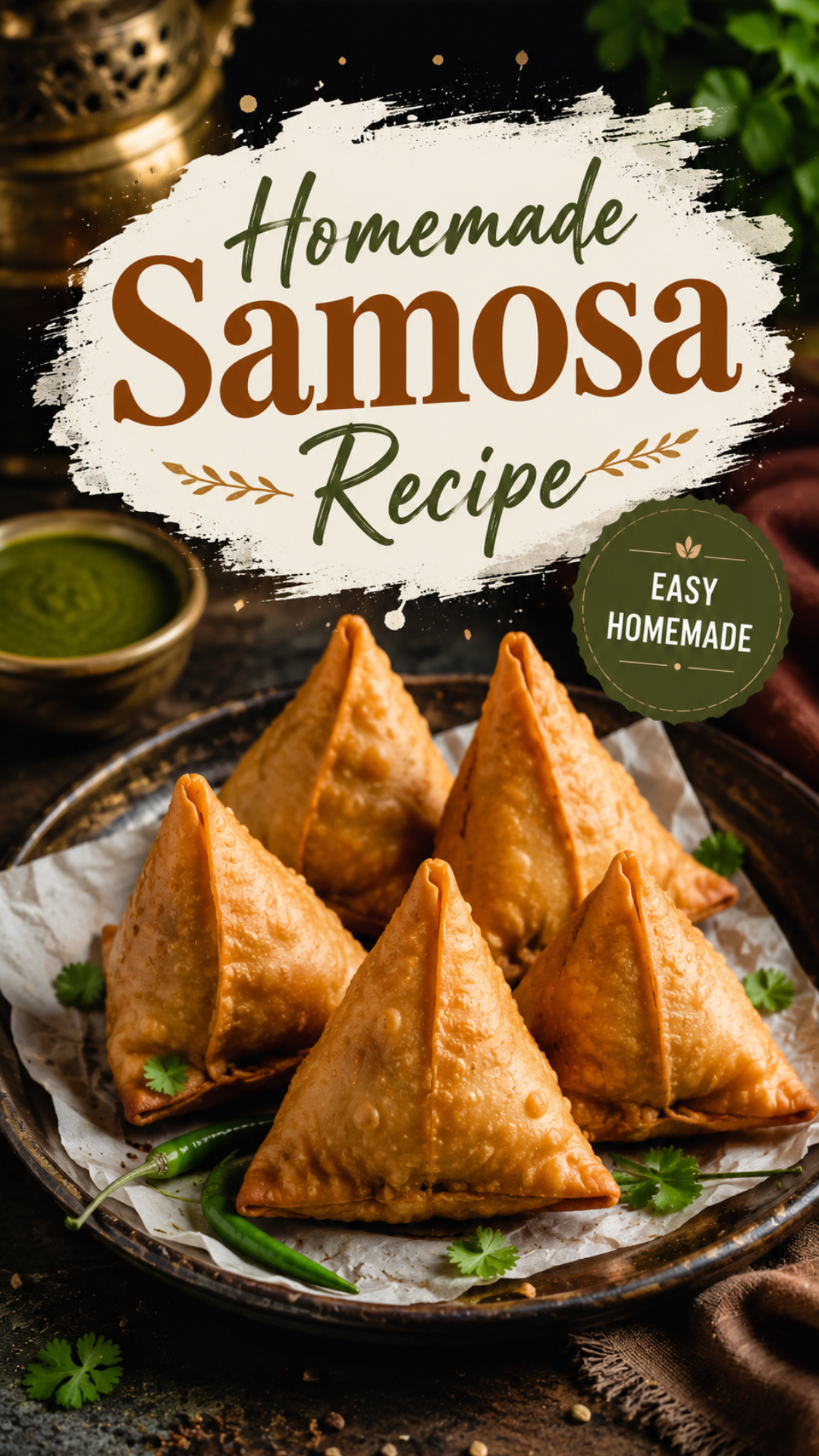
I used to think samosas were one of those things you just had to order.
Then I made a batch in my own kitchen and honestly? I haven’t ordered them since.
There’s a reason these little pockets show up at every party, every food truck, every corner shop in India. They’re crispy. They’re spiced just right. And once you bite into one, you kind of understand why people build entire meals around them.
The good news is you don’t need any fancy equipment or a lifetime of practice to make them at home. You just need a good dough, a solid filling, and about an hour of your time.
Let’s get into it.
Recipe At A Glance
| Detail | Info |
|---|---|
| Prep Time | 30 minutes |
| Chill Time | 30 minutes |
| Cook Time | 25 minutes |
| Total Time | About 1 hour 25 minutes |
| Yield | 12 samosas |
| Difficulty | Medium |
| Best For | Snacks, parties, tea time |
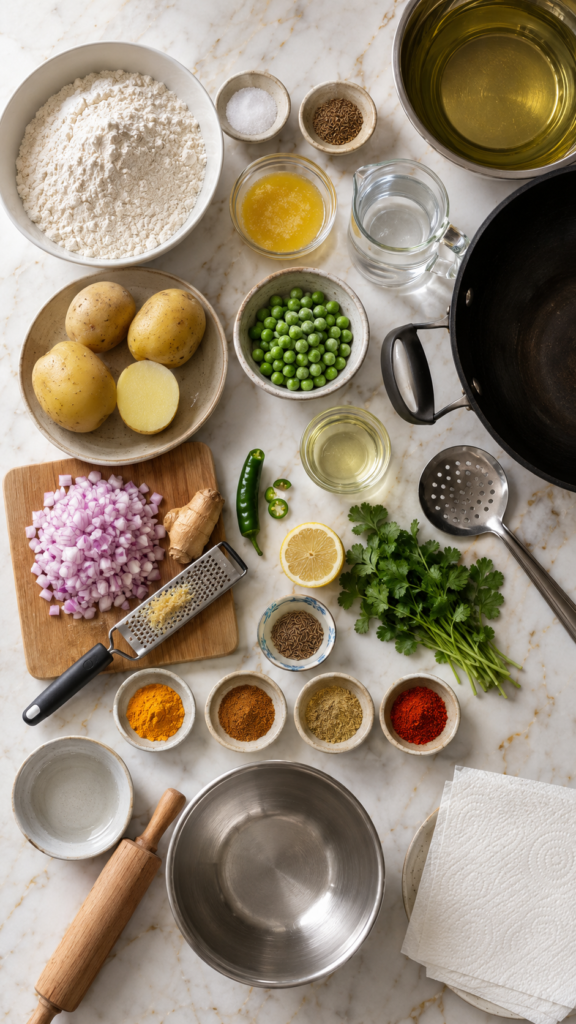
What You’ll Need
For the dough:
- 2 cups all-purpose flour
- 1/2 tsp salt
- 1/4 tsp ajwain (carom seeds), optional but really worth it
- 1/4 cup melted ghee or vegetable oil
- 1/2 cup cold water (add slowly, you may not need it all)
For the filling:
- 3 medium potatoes, boiled and mashed
- 1/2 cup green peas, fresh or frozen
- 1 tbsp oil
- 1 tsp cumin seeds
- 1 small onion, finely chopped
- 1 tsp grated ginger
- 1 green chili, minced (skip it if you want less heat)
- 1/2 tsp turmeric
- 1 tsp garam masala
- 1 tsp coriander powder
- 1/2 tsp red chili powder
- 1 tbsp lemon juice
- 2 tbsp chopped cilantro
- Salt to taste
For frying:
- Vegetable oil, enough for deep frying
Tools You’ll Need
- Mixing bowl
- Rolling pin
- A small bowl of water (for sealing the edges)
- Deep pan or wok for frying
- Slotted spoon
- Paper towels for draining
How To Make Samosas
Step 1: Make the dough
Mix the flour, salt, and ajwain in a bowl.
Add the melted ghee and rub it into the flour with your fingers until it looks like coarse crumbs.
Slowly add cold water, a little at a time, until the dough comes together. It should be firm, not soft like bread dough.
Knead for about 2 minutes. Cover it with a damp cloth and let it rest for 30 minutes.
This resting step matters more than you’d think. Skip it and your dough will fight you the whole way through.
Step 2: Make the filling
Heat oil in a pan over medium heat. Add cumin seeds and let them sizzle for a few seconds.
Add the chopped onion and cook until soft and lightly golden.
Stir in the ginger and green chili, then cook for another minute.
Add the turmeric, coriander powder, red chili powder, and garam masala. Stir everything together so the spices don’t burn.
Add the mashed potatoes and peas. Mix well so the spices coat everything evenly.
Finish with lemon juice, cilantro, and salt to taste. Let the filling cool completely before you use it. Warm filling will tear your dough apart.
Step 3: Shape the samosas
Divide the dough into 6 equal balls.
Roll each ball into a thin oval, about 6 inches across.
Cut the oval in half so you have two semi-circles.
Take one semi-circle and fold it into a cone shape, sealing the straight edge with a little water.
Fill the cone with about 2 tablespoons of filling. Don’t overstuff it, or it’ll burst open while frying.
Seal the top edge with water and press firmly so nothing leaks out.
Repeat with the rest of the dough and filling.
Step 4: Fry until golden
Heat oil in a deep pan to about 325°F. Low and slow is the secret here.
Add the samosas in small batches. Don’t crowd the pan.
Fry for 12 to 15 minutes, turning occasionally, until they’re golden brown and the shell is fully crisp.
Drain on paper towels and let them cool for a few minutes before serving. They’ll be seriously hot inside.
Pro Tips
- Don’t rush the oil temperature. Frying samosas too hot will brown the outside before the inside cooks through. Keep it low and steady.
- Seal the edges twice. Once with water, then press firmly with your fingers. This is what keeps the filling from leaking into your oil.
- Cool the filling completely before assembling. Warm filling creates steam, and steam is what causes cracks in the dough.
- Rest the dough for the full 30 minutes. It relaxes the gluten and makes rolling so much easier.
- Test your oil with a small dough scrap first. If it sizzles gently and rises slowly, you’re at the right temperature.
Substitutions And Variations
- Vegan version: Swap the ghee for oil. That’s the only animal product in this recipe.
- Gluten-free: Use a 1:1 gluten-free flour blend, though the texture will be slightly less flaky.
- Baked instead of fried: Brush with oil and bake at 400°F for 25 to 30 minutes, flipping halfway. It won’t be quite as crisp, but it’s lighter.
- Meat filling: Swap the potato and peas for spiced ground lamb or chicken for a heartier version.
- Sweet potato swap: Regular potatoes can be replaced with sweet potatoes for a slightly sweeter, softer filling.
- Air fryer method: Air fry at 375°F for about 15 minutes, flipping once, brushing with a little oil first.
Make-Ahead Tips
Samosas freeze beautifully, which honestly makes them one of the best make-ahead snacks around.
Assemble them fully, then freeze on a tray until solid. Once frozen, transfer to a bag or container.
When you’re ready to fry, go straight from freezer to oil. No need to thaw first. Just add a few extra minutes to the fry time.
Nutrition, Pairings, And Time-Saving Notes
One samosa (fried, medium size) comes in around 130 to 150 calories, depending on how much filling you use.
They pair really well with mint chutney, tamarind chutney, or a simple cup of chai.
To save time, make the filling a day ahead and store it in the fridge. That way, all you’re doing on samosa day is rolling, filling, and frying.
Leftovers And Storage
Cooked samosas keep well in the fridge for up to 4 days in an airtight container.
To reheat, skip the microwave. It makes them soggy. Instead, reheat in an oven or air fryer at 350°F for about 8 to 10 minutes until crisp again.
Uncooked, assembled samosas can be frozen for up to 3 months.
FAQ
Can I make samosas without deep frying them?
Yes. Baking or air frying both work well, though the texture will be a little less crisp than the traditional fried version.
Why did my samosas crack while frying?
This usually happens when the filling is still warm when you assemble them, or when the oil is too hot too fast.
What’s the best oil for frying samosas?
A neutral oil with a high smoke point works best, like vegetable oil, canola oil, or peanut oil.
Can I use store-bought pastry instead of making dough?
Spring roll wrappers or puff pastry can work in a pinch, though the flavor and texture will be different from the traditional version.
How do I keep samosas crispy after frying?
Let them cool on a wire rack instead of a plate. This keeps steam from softening the bottom.
Wrapping Up
Samosas take a little patience, but every step is honestly pretty simple once you get going.
Once you taste one straight out of the oil, still crackling and warm, you’ll get why people make these on repeat.
Give this recipe a try this weekend. Then come back and leave a comment telling me how it went, or ask me anything if you get stuck along the way. I’d love to hear about it. 🥟