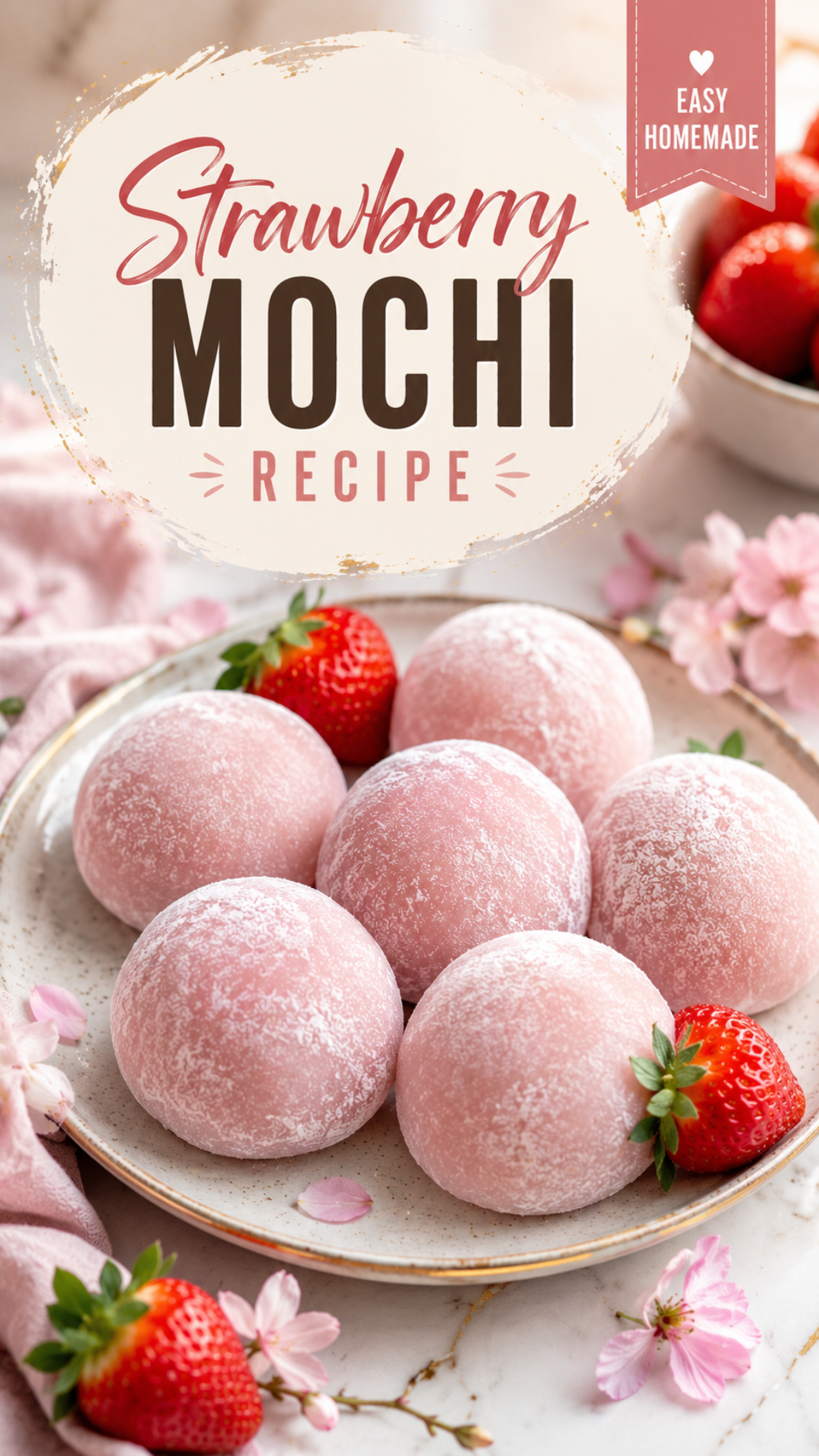
I didn’t expect a chewy rice ball to change how I think about sweets. But here we are. 🍓
The first time I bit into a strawberry mochi, I actually stopped mid-bite. Soft, chewy dough. A burst of tart, juicy strawberry. And somewhere in the middle, a little pocket of sweetness that ties it all together.
It felt like eating a tiny dessert built by someone who really understood texture.
Turns out, you don’t need a plane ticket to Japan or a professional pastry background to make these at home. You need a handful of ingredients, about 45 minutes, and a little patience while the dough cools.
That’s it.
Side Note: If you’ve ever been intimidated by mochi because it looks “fancy,” I get it. I thought the same thing. It’s actually one of the easiest desserts on this blog.
Recipe at a Glance
| Detail | Info |
|---|---|
| Prep Time | 30 minutes |
| Cook Time | 3 minutes |
| Chill Time | 15 minutes |
| Total Time | About 45 minutes |
| Yield | 8 mochi |
| Difficulty | Beginner-friendly |
| Diet | Vegetarian, can be made vegan and gluten-free |
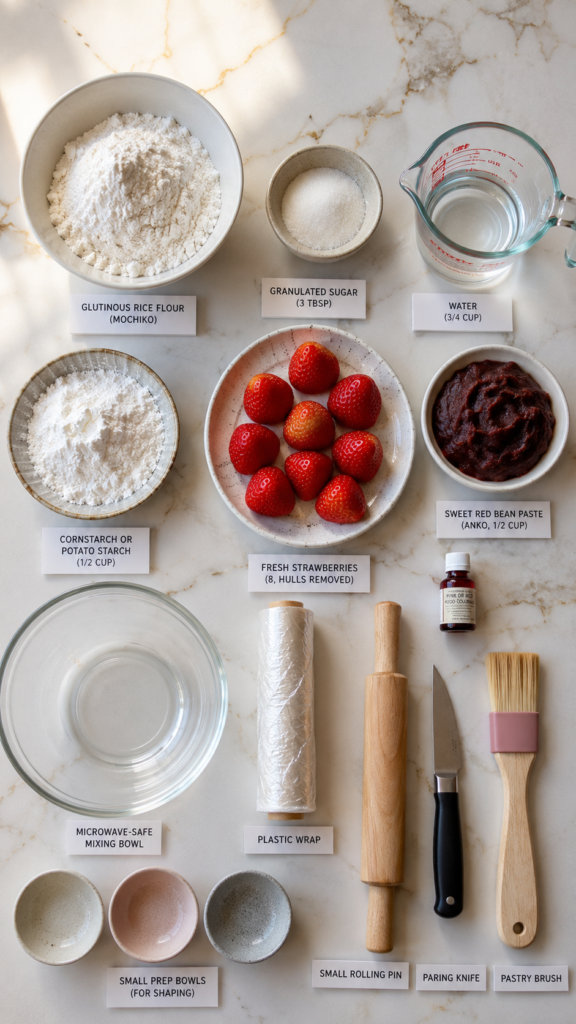
What You’ll Need
Ingredients:
- 1 cup glutinous rice flour (mochiko)
- 3 tablespoons granulated sugar
- ¾ cup water
- ½ cup cornstarch or potato starch (for dusting)
- 8 small-to-medium fresh strawberries, hulled
- ½ cup sweet red bean paste (anko), or white chocolate as a substitute
- Optional: a few drops of pink or red food coloring
Tools:
- Microwave-safe mixing bowl
- Plastic wrap
- Small rolling pin (or a wine bottle, no judgment)
- Paring knife
- Pastry brush
- Small bowls for shaping
How to Make Strawberry Mochi
Step 1: Prep the Strawberries
Hull your strawberries and pat them completely dry. Set them aside.
If you’re using bean paste, flatten about a tablespoon into a small disc and wrap it gently around each strawberry, leaving the tip exposed. Set these in the fridge while you make the dough.
Step 2: Make the Mochi Dough
In a microwave-safe bowl, whisk together the glutinous rice flour, sugar, and water until smooth.
Cover the bowl with plastic wrap and microwave for 1 minute. Stir. Microwave again for 1 more minute.
The dough should look translucent and stretchy, almost like a thick glue. If it still looks cloudy or dry in spots, microwave in 30-second bursts until it’s smooth throughout.
Step 3: Cool and Dust
Dust a clean surface generously with cornstarch or potato starch.
Turn the hot dough out onto the surface. Let it cool for about 5 minutes, just until you can touch it without burning yourself.
Step 4: Divide and Flatten
Dust your hands well, then divide the dough into 8 equal pieces.
Flatten each piece into a small disc, about 3-4 inches wide. Keep the edges slightly thinner than the center, since that makes wrapping easier.
Step 5: Wrap Your Filling
Place a bean-paste-wrapped strawberry in the center of each dough disc.
Gently pull the edges of the dough up and over the strawberry, pinching them together at the top to seal. Trim any excess dough with your paring knife.
Step 6: Chill and Serve
Dust off any excess starch with a pastry brush.
Chill the finished mochi for about 15 minutes before serving. This helps the texture set and makes the strawberry inside slightly cooler and juicier.
Pro Tips
Here’s what I wish someone had told me before my first batch:
- Dry your strawberries completely. Any extra moisture makes the dough slide around and refuse to seal. Pat them down with a paper towel.
- Dust your hands generously with starch. Mochi dough is famously sticky. If your hands feel tacky, add more starch immediately.
- Work fast once the dough cools slightly. It firms up quickly, and stiff dough cracks instead of stretching.
- Don’t overfill. A little bean paste goes a long way. Overstuffed mochi tend to burst open at the seams.
- Taste your strawberries first. Slightly underripe strawberries actually hold their shape better inside the dough than very soft, overripe ones.
Substitutions & Variations
Mochi is forgiving. Here’s how to make it your own:
- No bean paste? Swap in a small square of white chocolate or a spoonful of strawberry jam.
- Want it vegan? This recipe already is, as long as your bean paste doesn’t contain dairy (most don’t).
- Gluten-free? Glutinous rice flour is naturally gluten-free despite the name. Just double check your brand.
- Different fruit? Mango, kiwi, or raspberry all work beautifully using the same method.
- No food coloring? Skip it entirely. Natural mochi dough looks slightly cloudy white, and it still tastes exactly the same.
Make-Ahead Tips
You can prep the strawberries and wrap them in bean paste up to a day ahead. Keep them covered in the fridge.
The dough itself is best made fresh, since it firms up and becomes harder to work with the longer it sits.
Nutrition & Pairing Notes
Each mochi comes in around 90-110 calories, depending on your filling choice. They’re naturally low in fat and contain no eggs or dairy in the base recipe.
Pairs well with:
- Green tea or matcha lattes
- A light sparkling wine for parties
- Vanilla bean ice cream on the side
If you’re watching sugar intake, you can reduce the sugar in the dough to 2 tablespoons without losing the texture.
Leftovers & Storage
Mochi are best eaten within 24 hours, since the strawberry inside is fresh fruit and will start to soften.
Store leftovers in an airtight container in the fridge, and eat them within 1-2 days.
Don’t freeze these. Freezing changes the texture of both the strawberry and the dough, and they turn rubbery once thawed.
FAQ
Can I make mochi without a microwave? Yes. Steam the dough mixture in a heatproof bowl for about 20 minutes, stirring halfway through.
Why is my dough too sticky to work with? You likely need more starch on your hands and surface. Mochi dough is supposed to be sticky, so don’t be afraid to dust liberally.
Can I use frozen strawberries? Fresh is strongly recommended here. Frozen strawberries release too much liquid once thawed and make the dough fall apart.
How do I know when the dough is fully cooked? It should look glossy, translucent, and stretch like taffy when pulled. If it still looks opaque or dry, it needs more time.
Is mochiko the same as regular rice flour? No. Regular rice flour won’t give you the same chewy texture. You need glutinous rice flour, sometimes labeled as sweet rice flour or mochiko.
Wrapping Up
Strawberry mochi looks like something you’d only find at a specialty dessert shop, but it’s genuinely one of the easiest things you can make in your own kitchen.
Once you get the hang of the dough, you’ll probably start dreaming up your own filling combinations.
Give this one a try this weekend, then come back and drop a comment below. I’d love to hear how yours turned out, and if you ran into any questions along the way, ask away. I read every comment. 🍡