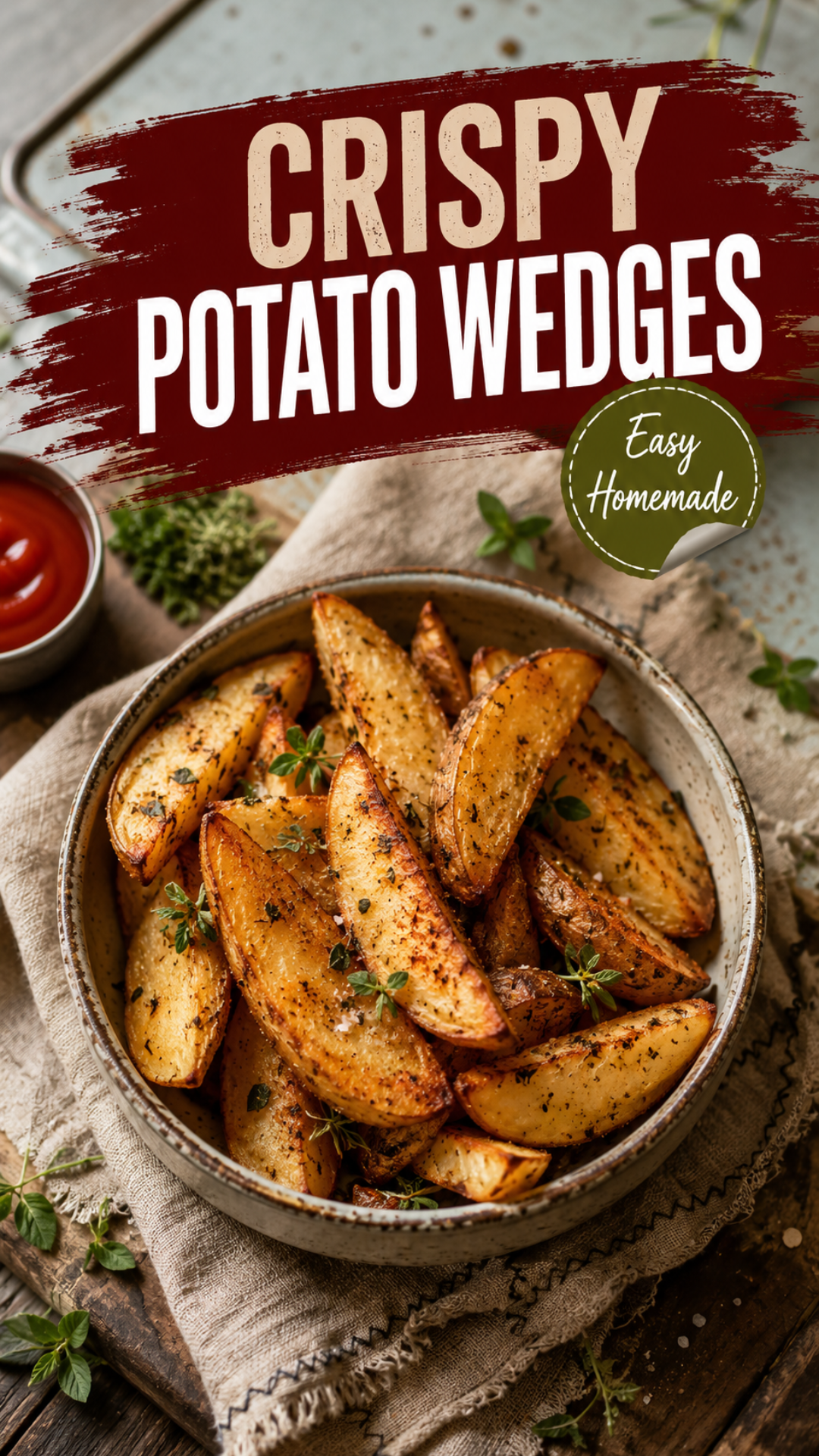
I used to think crispy potato wedges were one of those restaurant-only things.
You know the kind. Golden on the outside, fluffy in the middle, gone before you even sit down.
Turns out I was wrong. Really wrong.
After way too many soggy attempts (and one batch that basically turned into mashed potato rubble 🙃), I finally figured out the exact steps that make these wedges crunch on the outside every single time.
And the trick isn’t fancy. It’s not an air fryer gadget or some secret spice blend from a restaurant supply store.
It’s just a few small moves most people skip.
So grab your potatoes. This one’s worth the fifteen extra minutes.
Recipe at a Glance
| Detail | Info |
|---|---|
| Prep Time | 15 minutes |
| Cook Time | 35 minutes |
| Total Time | 50 minutes |
| Servings | 4 |
| Difficulty | Easy |
| Best For | Weeknight dinners, game day snacks, picky eaters |
What You’ll Need
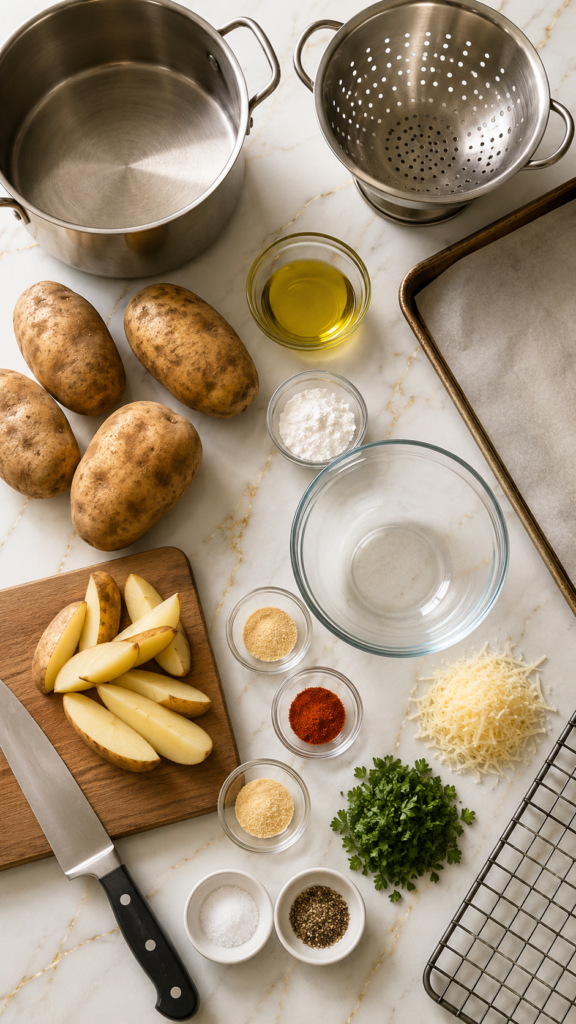
- 4 large russet potatoes
- 3 tablespoons olive oil
- 1 tablespoon cornstarch
- 1 teaspoon garlic powder
- 1 teaspoon smoked paprika
- 1/2 teaspoon onion powder
- 1 teaspoon salt (plus more for the boiling water)
- 1/2 teaspoon black pepper
- Fresh parsley, chopped, for serving
- Optional: grated parmesan for topping
That cornstarch is doing more work than you’d think. Keep reading and I’ll explain why it’s the real MVP here.
Tools You’ll Need
- Large pot for parboiling
- Colander
- Baking sheet
- Parchment paper or a wire rack
- Sharp knife
- Cutting board
- Mixing bowl
How To Make It
Step 1: Cut your potatoes into wedges
Wash your potatoes well and leave the skins on. That’s where a lot of the flavor and texture lives.
Cut each potato in half lengthwise, then cut each half into 3 to 4 wedges depending on size.
Try to keep them roughly the same size. Uneven wedges cook unevenly, and nobody wants a raw potato surprise.
Step 2: Parboil the wedges
This is the step most recipes skip, and it’s the whole reason your wedges have been coming out soft instead of crispy.
Bring a large pot of salted water to a boil. Add your wedges and boil for exactly 5 minutes.
You want them just barely tender on the outside, not falling apart.
Drain them in a colander and let them sit for 2 to 3 minutes. Give the colander a little shake.
That rough, slightly fluffy edge you see forming? That’s your crispy coating in the making.
Step 3: Dry them completely
Pat the wedges dry with a clean towel or paper towels.
I know it feels like a pointless step. It’s not.
Any leftover moisture turns straight into steam in the oven, and steam is the enemy of crispy.
Step 4: Coat with oil and seasoning
In a large bowl, toss the dried wedges with olive oil first, then add the cornstarch.
Toss again until every wedge has a light, even coating.
Then add your garlic powder, smoked paprika, onion powder, salt, and pepper. Toss one more time.
Step 5: Arrange and bake
Preheat your oven to 425°F.
Line a baking sheet with parchment paper, or better yet, set a wire rack on top of it.
Lay the wedges out in a single layer, skin side down, with space between each one. Crowding the pan is basically asking for steamed potatoes.
Bake for 20 minutes, flip each wedge, then bake for another 15 minutes until deep golden brown.
Step 6: Serve immediately
Sprinkle with fresh parsley and parmesan if you’re using it.
Serve right away while they’re at peak crunch. Every minute they sit, that crisp starts fading a little.
Pro Tips
Use russet potatoes, not red or yellow. Russets have more starch and less moisture, which is exactly what you want for crunch.
Don’t skip the parboil. I tried shortcuts. Every single one gave me softer wedges.
Space is everything on that baking sheet. If wedges touch, they steam instead of roast. Use two sheets if you need to.
A wire rack beats parchment paper. Air circulates underneath the wedges, so both sides crisp up instead of just the top.
Season after the oil, not before. The cornstarch and oil need to bond to the potato first. Seasoning too early makes it clump instead of coat evenly.
Substitutions and Variations
- Sweet potatoes: Swap in sweet potatoes for a slightly softer, sweeter wedge. Skip the parboil step here since sweet potatoes don’t need it.
- Spicy version: Add 1/2 teaspoon cayenne or chili powder to the seasoning mix.
- Herby version: Toss in dried rosemary or thyme along with the garlic powder.
- No cornstarch: Arrowroot powder or potato starch both work as a 1:1 swap.
- Air fryer method: Skip the oven and air fry at 400°F for 15 to 18 minutes, shaking the basket halfway through.
Make-Ahead Tips
You can parboil and dry the wedges up to a day ahead. Store them in the fridge in an airtight container.
When you’re ready to bake, toss them in oil, cornstarch, and seasoning straight from the fridge. Just add a couple extra minutes to the bake time since they’ll be starting out cold.
A Few Extra Details
Nutrition (per serving, roughly): 220 calories, 8g fat, 34g carbs, 4g protein, 3g fiber. This will shift depending on your exact potato size and how heavy-handed you are with the oil.
Diet-friendly swaps:
- Gluten-free: This recipe is naturally gluten-free as written.
- Vegan: Skip the parmesan or use a plant-based version.
- Lower-oil: Cut the oil to 2 tablespoons and rely more on the wire rack for crispiness.
What to pair them with: These wedges go with almost anything. Grilled chicken, burgers, a big green salad, or just a good dipping sauce and call it dinner.
Time-saving tip: Cut and parboil your potatoes the night before. That turns this into a 20-minute weeknight meal instead of a 50-minute one.
Leftovers and Storage
Store leftover wedges in an airtight container in the fridge for up to 4 days.
Skip the microwave when reheating. It turns them soft again almost instantly.
Instead, reheat in a 400°F oven or air fryer for about 8 minutes until they crisp back up.
Freezing works too. Freeze the baked, cooled wedges in a single layer, then transfer to a freezer bag once solid. They’ll keep for up to 2 months.
FAQ
Why are my potato wedges soggy?
Most likely one of two things: too much moisture before baking, or a crowded pan. Both trap steam, and steam ruins crisp.
Can I skip the parboiling step?
You can, but the texture won’t be the same. Parboiling roughs up the potato’s surface, which is what gives you that shatter-crisp exterior.
Do I need to peel the potatoes?
Nope. The skins crisp up nicely and add extra texture and flavor.
Can I make these in an air fryer?
Yes, and it actually works really well. See the substitutions section above for the exact settings.
What’s the best dipping sauce for potato wedges?
Garlic aioli, ranch, and a spicy ketchup all work great. Honestly, a good sour cream and chive dip is underrated too.
Wrapping Up
Crispy potato wedges sound simple, and honestly, they are.
But that small parboil step and a light coating of cornstarch make a bigger difference than you’d expect.
Give this one a try this week and see for yourself.
Once you make them this way, it’s genuinely hard to go back to any other method.
Drop a comment below and let me know how yours turned out. And if you tried a variation or ran into any questions along the way, I’d love to hear about it. 🍽️