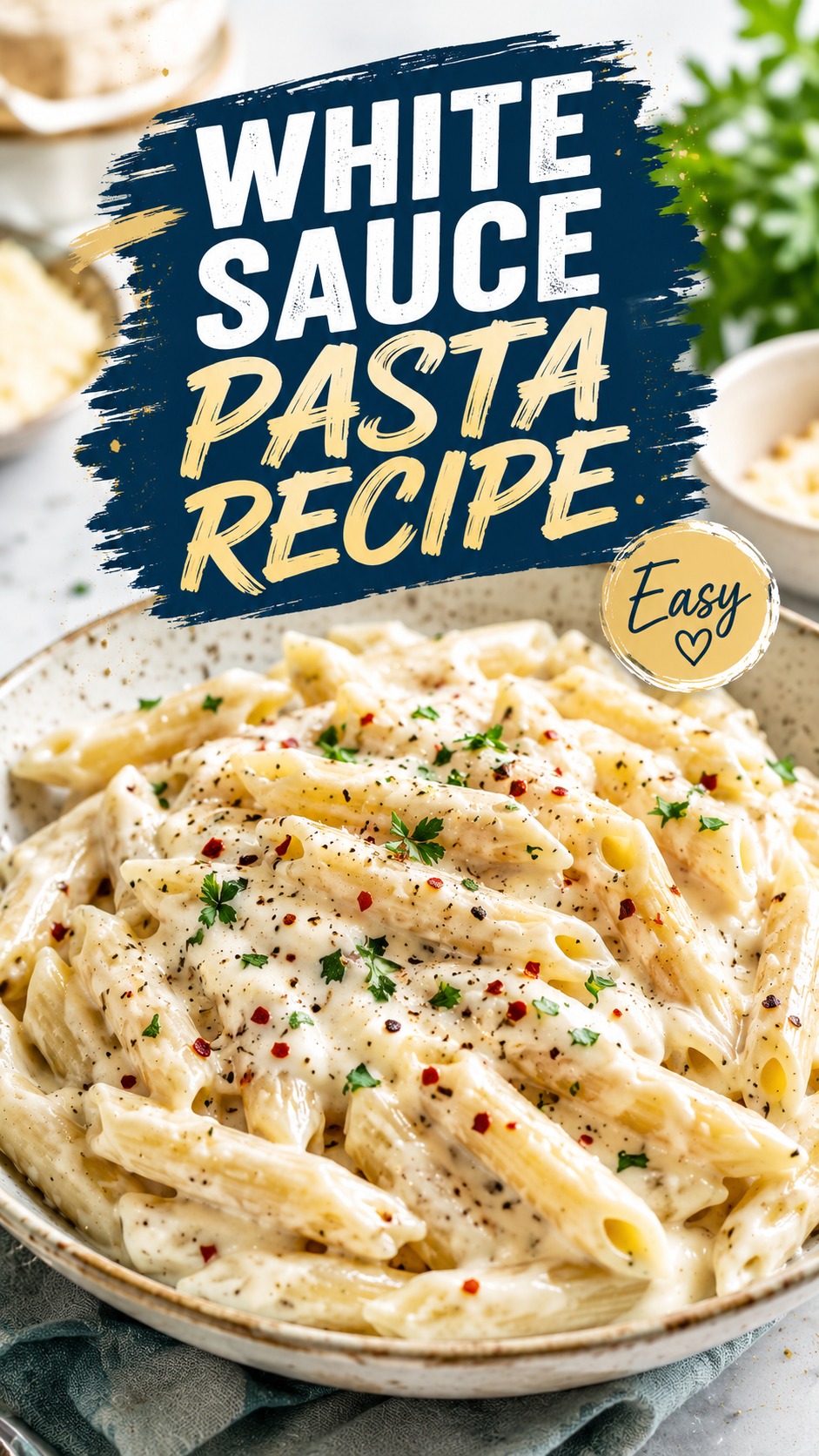
I wasn’t trying to start anything.
I just cracked my kitchen window because it was hot, and twenty minutes later my neighbor was standing on my porch asking what smelled so good. 🧄
That’s white sauce pasta for you. It’s quiet until it isn’t.
This dish looks fancy on a plate, but it’s really just butter, flour, milk, and cheese having a conversation with each other. No cream cheese shortcuts, no jarred sauce, no stress.
I’ve made this more times than I can count, and I’m going to walk you through every little thing I’ve learned so your first try turns out perfect. Even the mistakes I made so you don’t have to.
Let’s get into it.
Recipe at a Glance
| Detail | Info |
|---|---|
| Prep Time | 10 minutes |
| Cook Time | 20 minutes |
| Total Time | 30 minutes |
| Servings | 4 |
| Difficulty | Beginner friendly |
| Best For | Weeknight dinners, date night in, picky eaters |
What You’ll Need
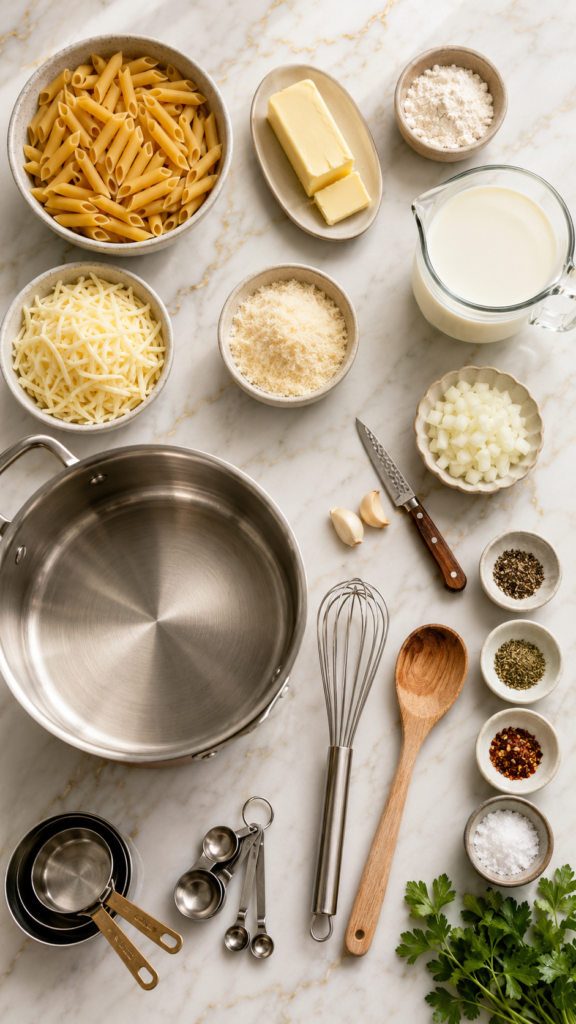
Here’s your shopping list. Nothing weird, nothing hard to find.
For the pasta:
- 300g penne or fettuccine
- Salt (for pasta water)
For the white sauce:
- 3 tablespoons butter
- 3 tablespoons all-purpose flour
- 2 cups whole milk (warmed slightly)
- 1 cup grated mozzarella cheese
- ¼ cup grated parmesan cheese
- 2 cloves garlic, minced
- 1 small onion, finely chopped
- ½ teaspoon black pepper
- ½ teaspoon dried oregano
- ½ teaspoon chili flakes (optional, but I always add it)
- Salt to taste
- Fresh parsley, chopped, for garnish
Optional add-ins:
- 1 cup mushrooms, sliced
- 1 cup bell peppers, diced
- 1 cup boiled and shredded chicken
Tools You’ll Need
- A large pot for boiling pasta
- A colander
- A heavy-bottomed saucepan or skillet (this matters more than you’d think)
- A whisk
- Measuring cups and spoons
- Wooden spoon or silicone spatula
How to Make White Sauce Pasta
Step 1: Boil the Pasta
Bring a large pot of salted water to a boil.
Add your pasta and cook until just al dente, usually a minute or two less than the package says. Drain and set aside. Don’t rinse it. That starch helps the sauce cling on later.
Step 2: Sauté the Aromatics
In your saucepan, melt the butter over medium heat.
Once it’s foaming a little, toss in the chopped onion. Cook for 2 to 3 minutes until soft and slightly golden.
Add the minced garlic and cook for another 30 seconds. Just until it smells incredible, not longer, or it turns bitter fast.
Step 3: Build the Roux
Sprinkle in the flour and whisk it into the butter mixture right away.
Keep whisking for about a minute. This cooks off the raw flour taste and this step is what separates a good white sauce from a gluey, flour-tasting one.
Step 4: Add the Milk Slowly
Here’s the part people rush, and it’s the part that ruins the sauce when they do.
Pour in the warm milk in small splashes, whisking constantly after each pour. Adding it all at once is how you end up with lumps you can’t fix.
Keep whisking until the sauce is smooth and starts to thicken, about 4 to 5 minutes.
Step 5: Cheese It Up
Lower the heat and stir in the mozzarella and parmesan.
Keep stirring until it’s fully melted and the sauce turns silky. Season with salt, pepper, oregano, and chili flakes.
Step 6: Combine and Serve
Add your cooked pasta straight into the sauce.
Toss gently until every piece is coated. If it looks too thick, splash in a little of the pasta water. It fixes almost everything.
Top with fresh parsley and an extra sprinkle of parmesan, then serve immediately.
Pro Tips
- Warm your milk first. Cold milk hitting hot roux is the number one reason people end up with lumps. A quick 30 seconds in the microwave fixes this.
- Whisk, don’t stir. A whisk breaks up clumps before they form. A spoon just pushes them around.
- Grate your own cheese. Pre-shredded cheese has anti-caking powder on it that keeps sauces from going smooth. It’s a small change that makes a big difference.
- Low and slow wins. If your sauce ever looks like it’s about to boil hard, pull it off the heat for a few seconds. Boiling cheese sauce can cause it to separate.
- Taste before you salt. Parmesan is already salty, so add your salt at the very end, not the beginning.
Substitutions and Variations
- Gluten-free: Swap the flour for a 1:1 gluten-free blend and use gluten-free pasta.
- Dairy-free: Use plant butter, oat milk, and a dairy-free mozzarella alternative. It won’t taste identical, but it’s close.
- Spicier version: Double the chili flakes or add a diced jalapeño with the onions.
- Protein boost: Stir in shredded rotisserie chicken or sautéed shrimp at the very end.
- Veggie-loaded: Sauté mushrooms, spinach, or bell peppers with the onions for extra bulk and color.
- Herb swap: Basil or thyme work just as well as oregano if that’s what you have on hand.
Make-Ahead Tips
You can make the white sauce up to 2 days ahead.
Store it in an airtight container in the fridge, then reheat gently on the stove over low heat, whisking in a splash of milk to bring it back to life. Cook your pasta fresh when you’re ready to eat, since pasta doesn’t hold up nearly as well sitting around.
A Few Extra Details Worth Knowing
Nutrition (per serving, roughly): 420 calories, 15g protein, 48g carbs, 18g fat. This will shift depending on which pasta and cheese you use.
Meal pairing: A simple side salad with a lemon vinaigrette cuts through the richness perfectly. Garlic bread is also a very good idea here, no notes.
Time-saving tip: Boil your pasta and make the sauce at the same time on two burners. That’s how this whole recipe fits into 30 minutes instead of 45.
Leftovers and Storage
Store leftovers in an airtight container in the fridge for up to 3 days.
The sauce will thicken as it sits, so when reheating, add a small splash of milk and warm it slowly on the stove over low heat. Stir often.
Microwaving works too, just do it in 30-second bursts and stir between each one so it heats evenly instead of turning rubbery in spots.
I don’t recommend freezing this one. Dairy-based sauces tend to separate once thawed, and it just doesn’t come back to the same texture.
FAQ
Why did my sauce turn out grainy?
This usually means the cheese melted too fast over heat that was too high. Lower the heat and add cheese in small handfuls next time.
Can I use milk alternatives?
Yes, oat milk and unsweetened almond milk both work, though the sauce will be slightly thinner than with whole milk.
My sauce is too thick, what do I do?
Add a splash of warm milk or reserved pasta water and whisk until it loosens up.
My sauce is too thin, how do I fix it?
Let it simmer on low for a few extra minutes, whisking often, and it’ll thicken as it cooks.
Can I make this ahead for a dinner party?
Yes, make the sauce a day ahead and reheat gently, then toss with freshly boiled pasta right before serving.
Wrapping Up
This is one of those recipes that looks like it took way more effort than it actually did.
Thirty minutes, a handful of ingredients you probably already have, and a sauce that somehow makes people ask if you took a cooking class.
Give it a try this week, and when you do, come back and tell me how it went in the comments. I want to know if your neighbor came knocking too. 😄
If you run into any hiccups along the way, drop your questions below and I’ll help you sort it out.