
You know that moment when you taste something homemade and go, “Why have I been ordering this?”
That’s exactly what this chicken teriyaki does to people.
It’s sticky, glossy, perfectly sweet-savory, and done in under 30 minutes. And the sauce? Four ingredients. That’s it.
Japan’s version of teriyaki is actually nothing like the thick, ultra-sweet sauce most of us grew up with at restaurant chains. Traditional Japanese teriyaki is more delicate, more balanced, and way more nuanced. This recipe sits somewhere in the middle — deeply flavorful without being cloyingly sweet — and it works for a random Tuesday night just as much as it does when you have guests coming over.
Keep reading because there’s a pro tip about the sauce that most recipes skip, and it’s a total game changer. 🙌
Recipe at a Glance
| Detail | Info |
|---|---|
| Prep Time | 10 minutes |
| Cook Time | 20 minutes |
| Total Time | 30 minutes |
| Servings | 4 |
| Difficulty | Easy |
| Best For | Weeknight dinners, meal prep |
What You’ll Need
For the Chicken
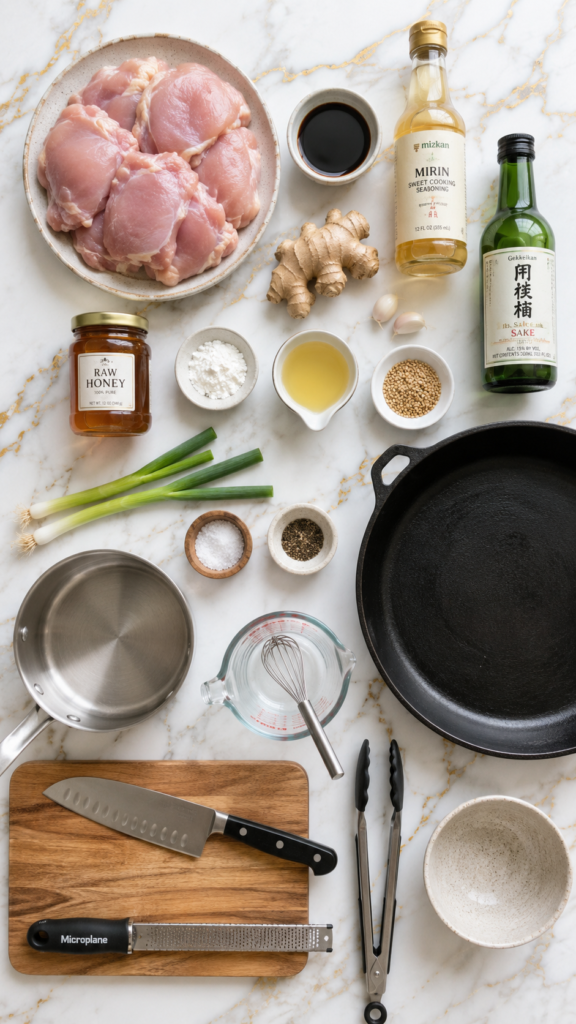
- 1.5 lbs (680g) boneless, skinless chicken thighs
- 1 tablespoon neutral oil (avocado, vegetable, or light olive oil)
- Salt and black pepper, to taste
- 1 teaspoon sesame seeds, for garnish
- 2 green onions, thinly sliced, for garnish
For the Teriyaki Sauce
- ¼ cup soy sauce (low-sodium preferred)
- ¼ cup mirin
- 2 tablespoons sake (or dry sherry as a substitute)
- 2 tablespoons honey (or brown sugar)
- 1 teaspoon fresh ginger, grated
- 2 cloves garlic, minced
- 1 teaspoon cornstarch + 1 tablespoon cold water (to thicken)
For Serving (Optional but Highly Recommended)
- Steamed jasmine or short-grain white rice
- Steamed or stir-fried broccoli, bok choy, or edamame
Tools You’ll Need
- Large skillet or cast iron pan
- Small saucepan or microwave-safe bowl
- Mixing bowl or liquid measuring cup
- Knife and cutting board
- Grater or microplane (for fresh ginger)
- Tongs or spatula
- Meat thermometer (optional, but helpful)
Pro Tips
These are the things I wish someone had told me before I made this the first five times. 😅
1. Use chicken thighs, not breasts. Chicken thighs stay juicy even if you accidentally cook them a little longer. Chicken breasts can dry out fast. Thighs also absorb the sauce flavor way better. Trust the thighs.
2. Make the sauce before you start cooking the chicken. This sounds obvious until you realize you’re scrambling to mix things together with a pan of chicken already going. Have the sauce ready and waiting.
3. Let the sauce reduce and get sticky. A lot of people pull the chicken off too early. You want the sauce to caramelize in the pan and coat the chicken in a glossy, lacquered layer. Give it those last 2-3 minutes.
4. Pat the chicken dry before it hits the pan. Moisture is the enemy of a good sear. Dry chicken = golden, caramelized crust. Wet chicken = sad steaming situation.
5. Don’t skip the cornstarch slurry. It’s what takes your sauce from watery to clingy and restaurant-quality thick. One teaspoon makes all the difference.
How to Make Chicken Teriyaki
Step 1: Mix the Sauce
In a small bowl or measuring cup, whisk together the soy sauce, mirin, sake, honey, grated ginger, and minced garlic.
Set it aside. You’ll add the cornstarch slurry later once it hits the pan.
Step 2: Prep the Chicken
Pat the chicken thighs completely dry with paper towels.
Season lightly with salt and black pepper on both sides. Not too much salt — the soy sauce has plenty.
Step 3: Sear the Chicken
Heat the oil in a large skillet over medium-high heat.
Once the oil is shimmering, add the chicken thighs smooth-side down. Don’t touch them for 5-6 minutes. You want a good, golden sear.
Flip and cook another 4-5 minutes on the other side until the internal temperature reaches 165°F (74°C).
Step 4: Add the Sauce
Reduce the heat to medium.
Pour the teriyaki sauce into the pan with the chicken.
Let it come to a simmer. While it simmers (about 1 minute), mix your cornstarch with the cold water in a small cup until smooth, then pour it into the pan.
Stir the sauce around the chicken. Watch it thicken up and turn beautifully glossy.
Spoon the sauce over the chicken repeatedly for 2-3 minutes until everything is coated and sticky.
Step 5: Rest and Slice
Remove the chicken from the heat and let it rest for 3 minutes before slicing.
This locks in the juices. Slice against the grain into strips.
Step 6: Serve
Plate over steamed rice, spoon extra sauce on top, and finish with sesame seeds and green onions.
Done. Genuinely done. 🍽️
Substitutions and Variations
No mirin? Swap it with 2 tablespoons of dry white wine + 1 teaspoon of sugar.
No sake? Dry sherry or even apple juice works in a pinch.
Prefer chicken breasts? Pound them thin so they cook evenly and watch the cook time closely. Pull them off the heat the second they hit 165°F.
Want it spicier? Add a teaspoon of sriracha or a pinch of red pepper flakes to the sauce.
Gluten-free? Swap soy sauce for tamari or coconut aminos.
Low sugar? Use just 1 tablespoon of honey instead of 2, or skip it entirely and let the mirin carry the sweetness.
Salmon teriyaki? This exact sauce works beautifully over salmon fillets. Cook skin-side down for 4 minutes, flip, sauce, done.
Make-Ahead Tips
You can make the teriyaki sauce up to a week ahead and store it in a sealed jar in the fridge.
The cooked chicken also keeps beautifully, making this one of the best meal prep recipes out there. Make a double batch on Sunday and you have lunches sorted for three days.
Additional Details
Nutritional Breakdown (Per Serving, Approximate)
| Nutrient | Amount |
|---|---|
| Calories | 320 kcal |
| Protein | 34g |
| Carbohydrates | 14g |
| Fat | 12g |
| Sodium | 820mg |
| Sugar | 10g |
Note: Values are for the chicken and sauce only, not including rice or sides.
Meal Pairing Suggestions
- Classic: Steamed white rice + edamame
- Lighter: Cauliflower rice + steamed bok choy
- Crowd-pleasing: Noodles + sesame cucumber salad
- Quick weeknight: Microwaved frozen broccoli + white rice (zero judgment here)
Ingredient Swaps for Different Diets
- Paleo/Whole30: Use coconut aminos instead of soy sauce and mirin, skip the honey or use a medjool date blended with water
- Keto: Skip the honey, reduce the mirin, use extra garlic and ginger for flavor depth
- Vegan: This exact sauce is incredible over pressed tofu, tempeh, or portobello mushrooms
Leftovers and Storage
Fridge: Store cooled chicken and sauce in an airtight container for up to 4 days.
Freezer: Freeze the cooked chicken in sauce for up to 2 months. Thaw overnight in the fridge.
Reheating: Warm it in a skillet over low heat with a tiny splash of water to loosen the sauce. Microwave works too — just cover it so the sauce doesn’t splatter.
Meal prep hack: Slice the chicken before storing. That way you can throw it straight onto rice bowls, salads, or wraps without any extra work.
FAQ
Can I use frozen chicken? Yes, just make sure it’s completely thawed and patted dry before cooking. Frozen chicken thrown straight into a pan will steam rather than sear.
Why is my sauce not thickening? Two likely reasons: you didn’t add the cornstarch slurry, or the heat wasn’t high enough. Turn up the heat slightly and stir constantly. It’ll thicken quickly once it gets there.
Can I grill the chicken instead? Absolutely. Grill the thighs over medium-high heat, then brush with the sauce during the last few minutes of cooking. You’ll get gorgeous caramelized grill marks.
Is store-bought teriyaki sauce the same? Technically? No. Most store-bought sauces have a lot of added sugar, preservatives, and a flavor that leans heavily sweet. This homemade version has actual depth from the garlic, ginger, and mirin. Once you make it yourself, it’s hard to go back.
Can I marinate the chicken in the sauce beforehand? You can, but it’s not necessary for this recipe. The sauce is so flavorful that marinating doesn’t add a huge difference. If you want to, 30 minutes to 2 hours in the fridge is plenty.
Can kids eat this? Yes! The sake cooks off completely during cooking, leaving only flavor. If you want to be extra careful, replace the sake with a splash of apple juice.
Wrapping Up
If you’ve been sleeping on homemade teriyaki, this is your sign to try it.
It costs less than takeout, takes less time than delivery, and tastes actually better. Plus, you’ll know every single thing that went into it, which is kind of a nice feeling.
Make it once and you’ll understand why people put it on repeat rotation. The glossy sauce alone is enough to make you want to eat it straight out of the pan. (Not that I’ve done that. Okay, maybe once.)
Give it a try this week and come back and drop a comment below telling me how it went! Did you change anything up? Serve it with something unexpected? I’d love to hear it. 😊