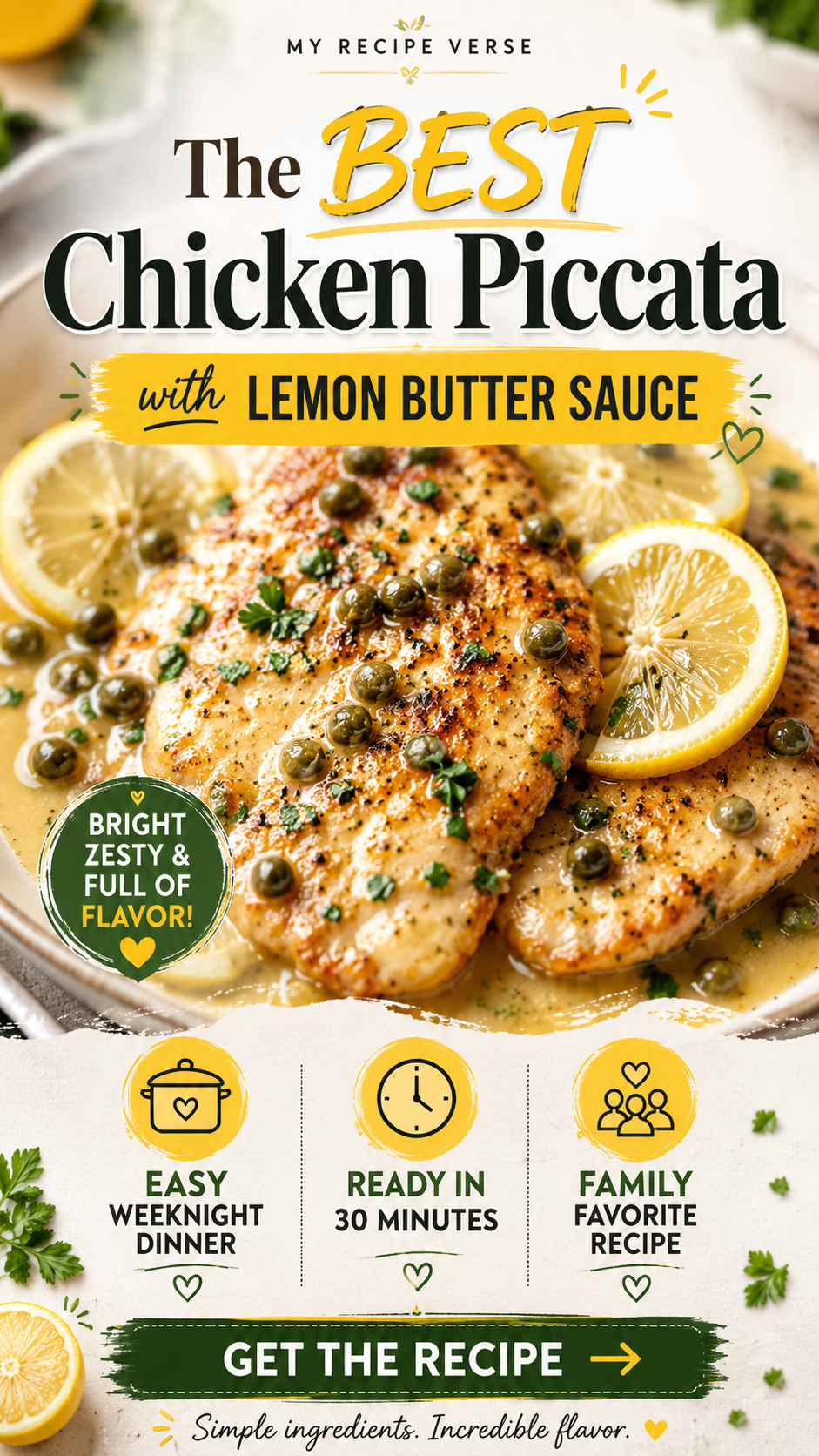
You know that moment when you take a bite of something and immediately think, “I’ve been doing dinner wrong this whole time”?
That’s chicken piccata.
It’s bright, tangy, a little buttery, and somehow comes together in under 30 minutes. The kind of meal you make on a Tuesday and feel like a proper adult about.
And here’s the thing, most people don’t know piccata isn’t just a fancy Italian restaurant dish. It’s actually one of the most approachable weeknight recipes you’ll ever make. No special equipment. No obscure ingredients. Just bold flavor that punches way above its effort level.
Stick around, because I’ve got a pro tip later that completely changes the texture of the chicken. 👀
Recipe at a Glance
| Detail | Info |
|---|---|
| Prep Time | 10 minutes |
| Cook Time | 20 minutes |
| Total Time | 30 minutes |
| Servings | 4 |
| Cuisine | Italian-American |
| Difficulty | Easy |
What You’ll Need
For the Chicken
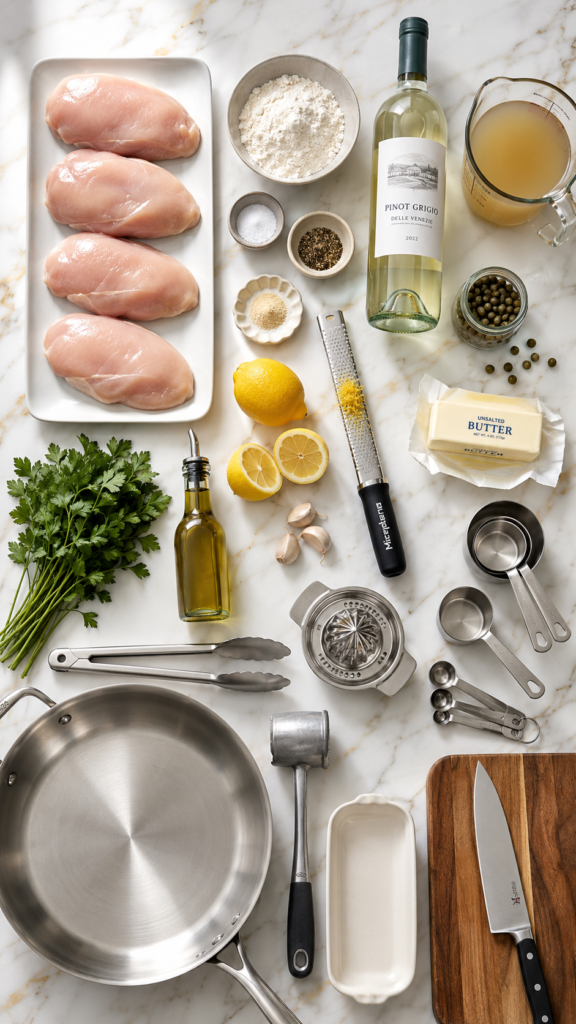
- 4 boneless, skinless chicken breasts (about 6 oz each)
- 1/2 cup all-purpose flour (for dredging)
- 1 teaspoon kosher salt
- 1/2 teaspoon black pepper
- 1/2 teaspoon garlic powder
- 3 tablespoons olive oil
- 2 tablespoons unsalted butter
For the Piccata Sauce
- 3 cloves garlic, minced
- 1/2 cup dry white wine (Pinot Grigio or Sauvignon Blanc work great)
- 1/2 cup low-sodium chicken broth
- 3 tablespoons fresh lemon juice (about 2 lemons)
- 1 teaspoon lemon zest
- 3 tablespoons capers, drained and rinsed
- 2 tablespoons unsalted butter (cold, cubed)
- 2 tablespoons fresh flat-leaf parsley, chopped
Tools You’ll Need
- Large skillet or sauté pan (12-inch, stainless steel or cast iron preferred)
- Meat mallet or rolling pin
- Shallow dish or plate (for dredging)
- Tongs
- Sharp knife and cutting board
- Microplane or zester
- Measuring cups and spoons
- Citrus juicer
Pro Tips
These are the things I wish someone had told me before I made this the first time:
- Pound the chicken thin. Aim for about 1/2 inch thickness. This isn’t just about cooking faster. It helps the chicken stay juicy and gives you more surface area for that golden crust. Thicker chicken = uneven cooking = sad dinner.
- Let your pan get properly hot before you add oil. A hot pan means the flour coating sears instantly instead of sitting and absorbing oil. That’s the difference between golden-crispy and pale-soggy.
- Use cold butter at the end. When you finish the sauce, add cold butter off (or almost off) the heat. This creates a silky, restaurant-style sauce through a process called mounting. Warm butter will just melt in without emulsifying and your sauce won’t have that glossy finish.
- Don’t skip the capers. I know they look weird in the jar. I know some people are suspicious of them. But capers are the thing that makes piccata piccata. They add a briny, slightly floral punch that no substitute can replicate.
- Deglaze the pan properly. After you remove the chicken, those little brown bits stuck to the pan are flavor gold. The wine will lift them right up. Don’t skip that step or rush through it.
How to Make Chicken Piccata
Step 1: Prep the Chicken
Place each chicken breast between two sheets of plastic wrap or in a zip-lock bag.
Pound to an even 1/2-inch thickness using a meat mallet.
Season both sides with salt, pepper, and garlic powder. Let it rest for a few minutes while you prep everything else.
Step 2: Dredge in Flour
Pour the flour into a shallow dish.
Coat each chicken breast in flour, pressing lightly so it adheres. Shake off the excess. You want a light, even coating, not a thick crust.
Step 3: Sear the Chicken
Heat 2 tablespoons of olive oil and 1 tablespoon of butter in your skillet over medium-high heat.
Once the butter is foamy and starting to settle, add the chicken. Do not crowd the pan. If your pan is small, cook in two batches.
Cook for 3 to 4 minutes per side until deep golden brown and cooked through (internal temp of 165°F). Transfer to a plate and tent loosely with foil.
Step 4: Build the Sauce
In the same pan, add the remaining tablespoon of olive oil and turn the heat to medium.
Add the minced garlic and cook for about 30 seconds until fragrant. It goes from fragrant to burnt very fast, so stay close.
Pour in the white wine and let it bubble up, scraping the browned bits from the bottom of the pan. Let it reduce for about 2 minutes.
Add the chicken broth, lemon juice, and lemon zest. Stir and let the sauce simmer for 3 to 4 minutes until slightly reduced.
Stir in the capers.
Step 5: Finish With Butter
Remove the pan from heat (or turn it to very low).
Add the cold, cubed butter one piece at a time, swirling the pan or stirring constantly until each piece is fully melted and incorporated. This is what makes the sauce glossy and luxurious.
Step 6: Bring It Together
Return the chicken to the pan and spoon the sauce over it. Let it warm through for about a minute.
Top with fresh parsley and serve immediately.
Substitutions and Variations
Not everyone has the same pantry, and that’s fine. Here’s what you can swap:
| Original | Substitution |
|---|---|
| White wine | Extra chicken broth + 1 tsp white wine vinegar |
| Capers | Green olives, finely chopped (different flavor but works) |
| Chicken breasts | Chicken thighs (boneless, skinless), thin-cut pork chops, or even firm tofu |
| All-purpose flour | Gluten-free 1:1 flour blend |
| Butter | Vegan butter for dairy-free version |
Want it creamier? Stir in 2 tablespoons of heavy cream with the butter at the end. It softens the tartness and makes the sauce more of a bisque-like texture.
Spicy version? Add a pinch of red pepper flakes when you cook the garlic.
Make-Ahead Tips
This one is best made fresh, but here’s how to get ahead:
- Pound and season the chicken up to 24 hours in advance. Store in an airtight container in the fridge.
- Make the sauce ahead and store separately. Reheat gently and re-emulsify with a small pat of cold butter before serving.
- Do not dredge the chicken ahead of time. The flour coating will get gummy if it sits.
What to Serve With It
Chicken piccata is begging for something to soak up that sauce. Here are the pairings that actually make sense:
- Angel hair pasta or linguine tossed in a little olive oil
- Creamy mashed potatoes (yes, 10/10)
- Steamed or roasted asparagus
- Crusty bread for pure, unashamed sauce-mopping
- Risotto if you want to fully commit to an Italian-inspired dinner
A dry white wine like Pinot Grigio or Sauvignon Blanc pairs perfectly as a drink, too. It’s the same wine in the sauce, so it just makes sense.
Nutritional Breakdown (Per Serving, Approximate)
| Nutrient | Amount |
|---|---|
| Calories | ~380 kcal |
| Protein | 38g |
| Fat | 19g |
| Carbohydrates | 10g |
| Sodium | 520mg |
Values are approximate and will vary based on exact portion size and specific ingredients used.
Leftovers and Storage
Chicken piccata stores well for 2 to 3 days in the fridge in an airtight container.
To reheat: Do it gently in a skillet over low heat with a splash of chicken broth to loosen the sauce. The microwave works in a pinch, but go low and slow to avoid rubbery chicken.
Can you freeze it? Technically yes, but the sauce can separate and lose its silky texture once thawed. If you need to freeze it, do so before adding the butter to the sauce, then finish the sauce fresh when you reheat.
FAQ
Can I use bottled lemon juice instead of fresh? You can, but fresh lemon juice makes a noticeable difference here. Bottled juice can taste flat and slightly bitter. This recipe is built around that bright, clean lemon flavor, so fresh is the way to go.
My sauce is too thin. What do I do? Let it simmer a little longer to reduce, or whisk in a tiny slurry of 1 teaspoon cornstarch mixed with 1 tablespoon cold water. Add it slowly and stir.
My sauce broke and looks greasy. Can I fix it? Yes! This usually happens if the butter is added too fast or the heat is too high. Take the pan completely off heat, let it cool slightly, add a tablespoon of cold water and whisk vigorously. It should come back together.
Can I make this without wine? Absolutely. Use chicken broth in place of the wine and add an extra teaspoon of lemon juice. It won’t be exactly the same, but it’ll still be delicious.
Is this the same as chicken francese? Close, but not the same! Chicken francese uses an egg batter instead of flour before the wine-lemon sauce. Piccata is flour-dredged and includes capers. Two different dishes, both worth knowing.
How do I know when the chicken is done without cutting into it? Use an instant-read thermometer. 165°F in the thickest part means it’s done. If you don’t have one, they’re genuinely one of the most useful kitchen tools you’ll ever own.
Wrapping Up
Here’s the thing about chicken piccata: it sounds like a restaurant dish, but it’s completely doable on a random Wednesday night in 30 minutes.
That lemony, briny, buttery sauce? It makes a pretty ordinary chicken dinner feel like something you’d pay $28 for and then try to recreate at home.
Now you can just make it at home directly. 😄
Give this recipe a shot, and drop a comment below to let me know how it went. Did you add cream? Serve it over pasta? Use a wine you also drank while cooking (no judgment)? I want to hear all of it.
And if you run into any issues or have questions, leave those in the comments too. That’s what this is here for.