I didn’t believe it either.
A cake that’s mostly ricotta cheese, barely any flour, and still comes out soft, rich, and slightly bouncy in the middle? Sounds like a baking myth.
But I made it four times last month to get it right, and now I’m convinced it’s one of the easiest “fancy” desserts you can pull off in your own kitchen.
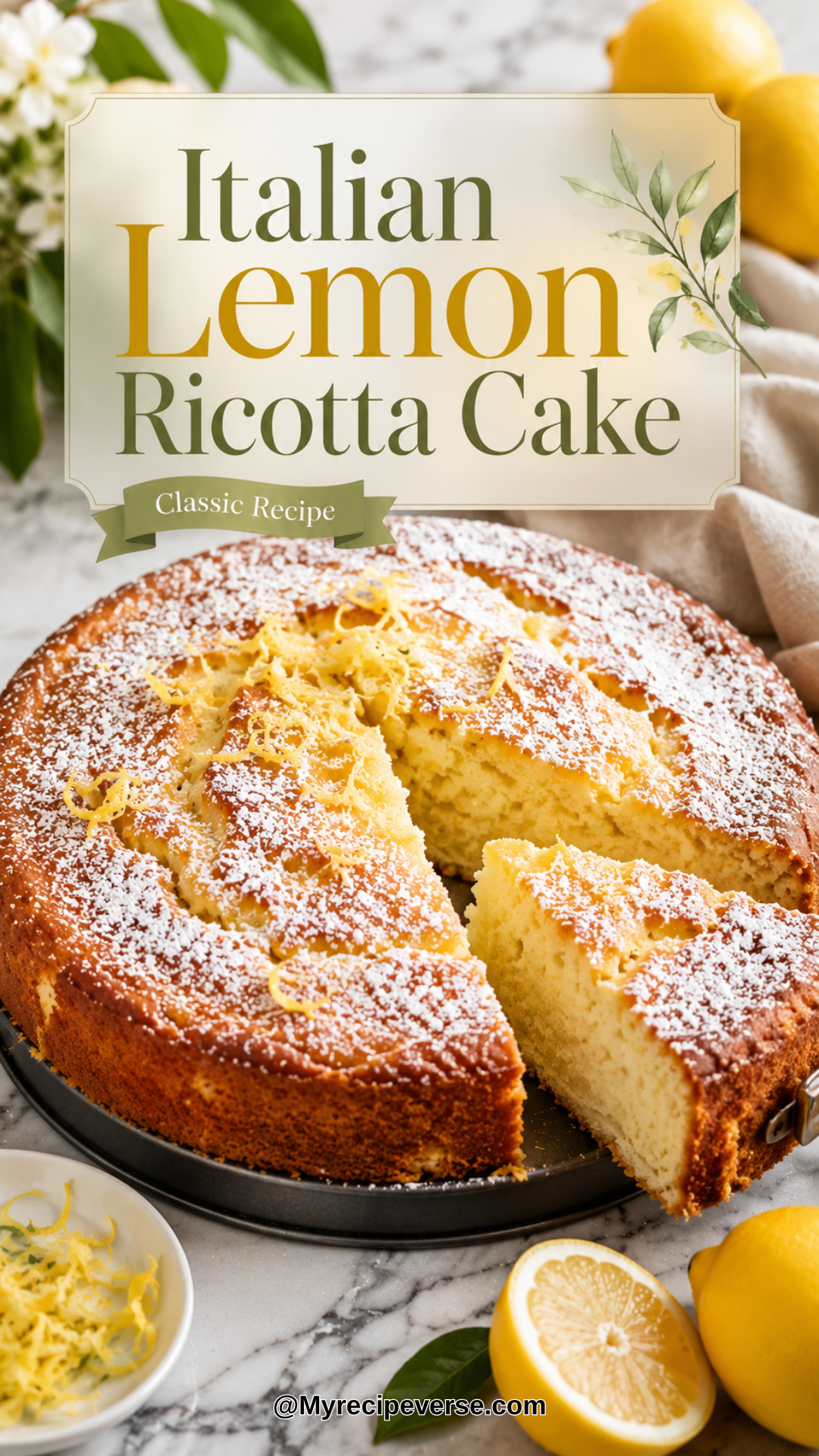
This is an Italian Lemon Ricotta Cake. It’s the dessert Italian grandmothers make when they want something impressive without turning the kitchen into a war zone. No layers, no fondant, no piping bags.
Just one bowl, one pan, and a lemon you probably already have sitting in your fridge.
Let’s get into it. 🍋
Recipe at a Glance
| Detail | Info |
|---|---|
| Prep Time | 15 minutes |
| Bake Time | 45-50 minutes |
| Total Time | About 1 hour 10 minutes |
| Servings | 8 slices |
| Difficulty | Easy |
| Best For | Weekend baking, dinner parties, “I need a dessert in an hour” moments |
What You’ll Need
Here’s everything that goes into the batter. Nothing exotic, I promise.
- 1 1/2 cups all-purpose flour
- 1 1/2 teaspoons baking powder
- 1/4 teaspoon salt
- 3/4 cup granulated sugar
- 3 large eggs
- 1 cup whole milk ricotta cheese
- 1/2 cup unsalted butter, melted
- Zest of 2 lemons
- 1/4 cup fresh lemon juice
- 1 teaspoon vanilla extract
- Powdered sugar, for dusting
That’s it. Ten ingredients and most of them are already sitting in your pantry right now.
Tools You’ll Need
- Two mixing bowls (one large, one medium)
- Whisk
- Microplane or fine zester
- 9-inch round cake pan
- Parchment paper
- Hand mixer or stand mixer
- Cooling rack
- Fine mesh sieve (optional, for dusting)
How to Make It
Step 1: Prep your pan and oven
Preheat your oven to 350°F. Grease your cake pan, then line the bottom with parchment paper.
This cake is soft and a little delicate. Skipping the parchment is how you end up with half your cake stuck to the pan.
Step 2: Mix the dry ingredients
In your medium bowl, whisk together the flour, baking powder, and salt.
Set it aside. This part takes about 30 seconds and there’s no trick to it.
Step 3: Beat the eggs and sugar
In your large bowl, beat the eggs and sugar together for a full 2-3 minutes.
You’re looking for the mixture to turn pale yellow and almost double in size. This step is where a lot of the cake’s lift actually comes from, since there’s so little flour doing the work.
Step 4: Add the wet ingredients
Mix in the ricotta, melted butter, lemon zest, lemon juice, and vanilla.
Beat until smooth. It’ll look a little loose and lumpy at first. That’s normal.
Step 5: Fold in the dry mix
Add your flour mixture in two batches, folding gently with a spatula each time.
Stop mixing the moment you don’t see dry flour anymore. Overmixing here is the single biggest reason this cake turns dense instead of soft.
Step 6: Bake
Pour the batter into your prepared pan and smooth the top.
Bake for 45-50 minutes. The top should turn golden and a toothpick inserted in the center should come out clean or with a few moist crumbs.
Step 7: Cool completely
Let the cake cool in the pan for 15 minutes, then transfer it to a cooling rack.
Give it at least an hour before slicing. I know that’s hard. Cut it too early and the center will still be soft enough to collapse.
Step 8: Dust and serve
Once fully cooled, dust the top generously with powdered sugar.
Slice and serve as is, or with a small spoon of lemon curd on the side if you’re feeling extra.
Pro Tips
A few things I learned the hard way so you don’t have to:
- Use whole milk ricotta, not part-skim. Part-skim ricotta has more water in it, and that extra moisture can make your cake gummy instead of tender.
- Zest before you juice. Once a lemon is juiced, zesting it is nearly impossible. Always zest first.
- Don’t skip the resting time. I tried slicing one straight from the oven once. It fell apart on the plate. Patience actually matters here.
- Room temperature eggs whip better. Cold eggs straight from the fridge won’t beat up as light and airy, and that airiness is doing a lot of the structural work in this cake.
- Tap the pan before baking. A few firm taps on the counter releases trapped air bubbles and gives you a smoother top.
Substitutions and Variations
This cake is pretty forgiving. Here’s how to switch it up:
- Gluten-free: Swap the all-purpose flour for a 1:1 gluten-free baking blend. The texture stays almost identical.
- Dairy-free ricotta: Almond or cashew-based ricotta alternatives work, though the flavor will be slightly less rich.
- No lemon on hand: Orange zest and juice make a completely different but equally good version.
- Add-ins: Fold in a handful of fresh blueberries or a tablespoon of poppy seeds for texture.
- Extra citrus punch: Brush the warm cake with a thin lemon glaze (powdered sugar plus lemon juice) instead of dusting with sugar.
Make-Ahead Tips
You can make the batter up to a day ahead and store it covered in the fridge, though I recommend baking it fresh if you can.
The cake itself actually tastes better the next day once the lemon flavor has had time to settle in. If you’re prepping for a dinner party, bake it the night before and dust with powdered sugar right before serving.
A Few Extra Details
Nutritional snapshot (per slice, based on 8 servings):
| Nutrient | Approximate Amount |
|---|---|
| Calories | 280 |
| Fat | 14g |
| Carbs | 32g |
| Protein | 7g |
| Sugar | 20g |
Pairing suggestions: This goes really well with a strong espresso or an Italian sweet wine like Vin Santo. For a non-alcoholic option, a chilled limoncello soda works surprisingly well too.
Time efficiency tip: While the cake bakes, that’s your window to clean up the bowls and whisk. There’s genuinely nothing else to do during the 45 minutes, so use it.
Leftovers and Storage
- Counter: Keeps well covered at room temperature for up to 2 days.
- Fridge: Store in an airtight container for up to 5 days. The ricotta means it can dry out slightly in the fridge, so let slices sit out for 10 minutes before eating.
- Freezer: Wrap individual slices tightly in plastic wrap, then foil. Freezes well for up to 3 months. Thaw overnight in the fridge.
FAQ
Can I use a springform pan instead?
Yes, and it actually makes removing the cake easier since it’s so soft.
Why did my cake sink in the middle?
This usually means it was slightly underbaked, or it was cut before fully cooling. Give it the full hour of rest next time.
Can I make this into cupcakes instead?
Yes. Bake in a lined muffin tin at 350°F for about 18-20 minutes.
Is this the same as a New York style cheesecake?
Not quite. This cake has flour and a much lighter, more bread-like texture. Cheesecake is denser and has no flour at all.
Can I reduce the sugar?
You can cut it down to 1/2 cup without changing the texture much, though the cake will taste noticeably less sweet.
Wrapping Up
This cake surprised me. I went in expecting a dense, cheesecake-adjacent brick and came out with something light, citrusy, and almost springy in the middle.
It’s the kind of dessert that looks like it took real effort but actually just took one bowl and a lemon.
Give it a try this weekend and let me know how it turned out in the comments. Did the center hold up the way you expected? Did you try a substitution? I’d love to hear about it.